The Story
Why it exists.
The beginning
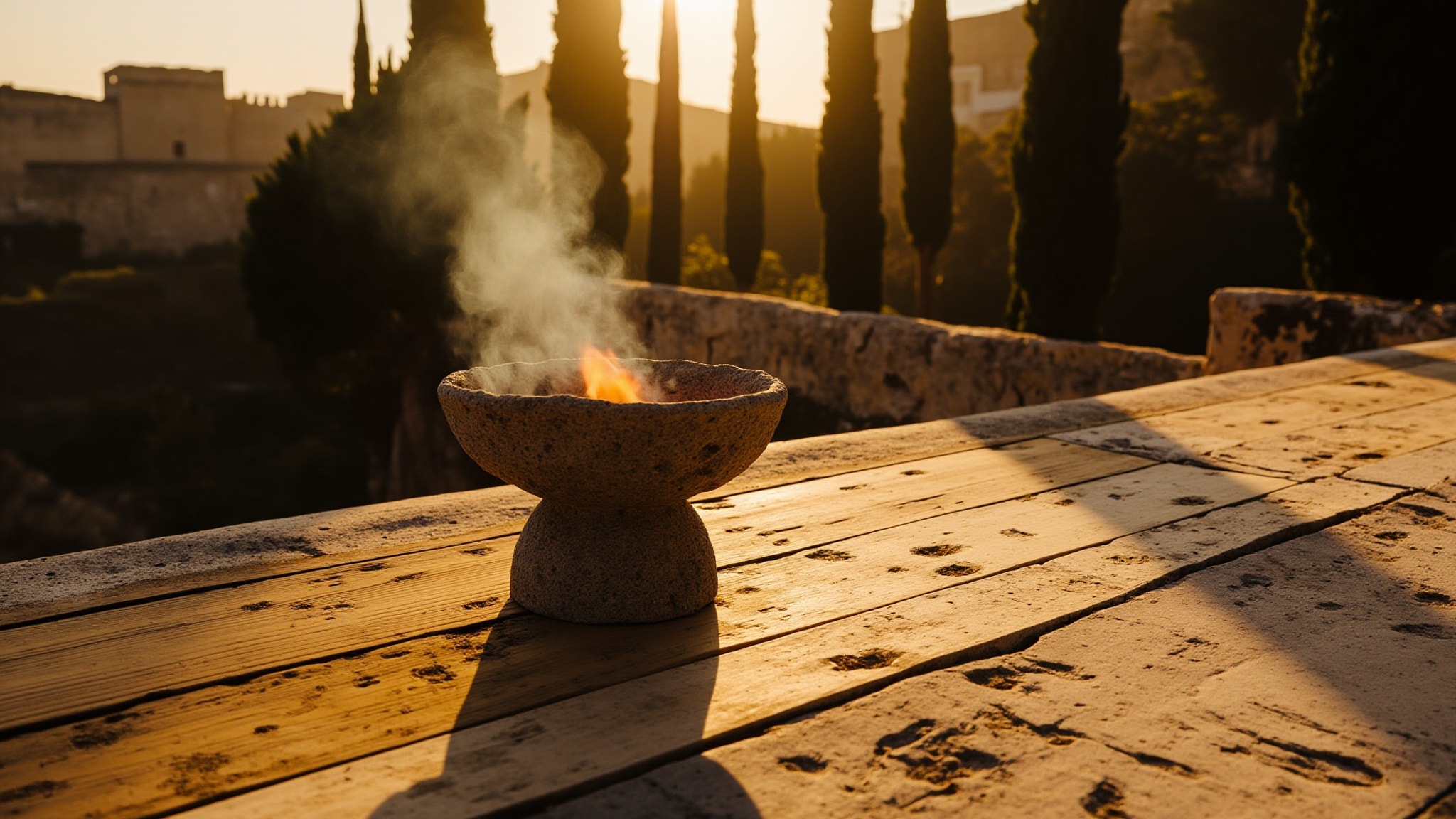
Les Baux de Provence rises from the southern French landscape like a crown of stone, a fortress-city that commanded the region for generations, shaping the landscape and the legend of the territory. The Chevaliers des Baux, those knights of the territory, chose the cypress as their emblem: tall, dark, unwavering. A symbol of resolve. The fragrance takes that symbol seriously. Karine Dubreuil-Sereni built Eau des Baux around that silence. Cardamom, pink pepper, and bergamot arrive in the opening, spices warmed by citrus, a volatile jolt that clears the air before settling. Then the cypress and incense take the center stage, not gently. They arrive as the heart, declarative, a composition that understands what it means to hold ground.
The pairing of cypress and incense is the structural centerpiece, and understanding why that choice carries weight begins with what each material actually does. Cypress is a conifer, dense, dark, slightly resinous. On its own, it reads green and austere, closer to pencilbox cedar than to the softer woods used in most Western masculines. Incense opens in a very different register: smoky, balsamic, warm. The friction between them is where the fragrance lives. One is cold and vertical. One rises and curls. Together they create an aromatic architecture that is neither purely herbal nor purely resinous, something between sanctuary and open fire.
The evolution
The opening hits quick, pink pepper prickling the nostrils for a brief, electric moment, bergamot lifting through it like light through a window just cracked. The cardamom settles in alongside, warm and sharp, and for a while the top notes play a quiet duet before retreating entirely. It's an efficient opening. Nothing lingers past its welcome. Soon after, the heart arrives. Cypress announces itself first, dark and coniferous, that pencil-wood quality cutting through what came before. The incense follows immediately, smoky and resinous, asserting itself without competing. You can feel the seam between phases here: the warm spice softens but doesn't disappear, the juniper and cinnamon threading through the cypress-incense axis like a quiet underscore. The drydown is where the fragrance earns its reputation.
Cultural impact
Eau des Baux occupies a warm spicy woody position in the masculine fragrance landscape. Its emphasis on cypress and incense gives it a distinct aromatic character, while the vanilla-and-tonka warmth in the drydown adds softness that tempers the resinous intensity. The fragrance presents a balance between boldness and approachability. The composition centers on cypress and incense as its defining elements, supported by a vanilla-and-tonka base that grounds the scent in warmth. Cedarwood reinforces the structure, creating a drydown that holds together through its final moments.