The Story
Why it exists.
The beginning
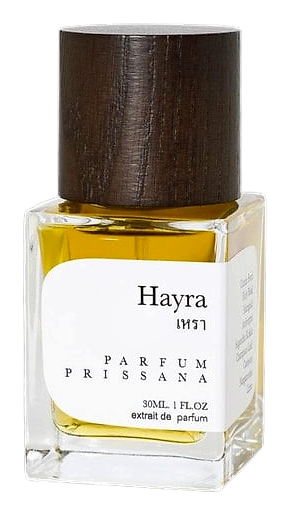
Hayra draws from Thai mythology, where the เหรา is a creature from the Himavanta forest: half crocodile and Naga, described in sources as an amphibian mythical creature. The being is mentioned in Thai literature and appears in Thai Buddhist temple architecture, where its form was referenced within sacred space. Prissana's composition translates that threshold into scent, pairing the mythological creature with the olfactory atmosphere of a rural Thai temple, where the resinous hush of incense and the slow turnover of warm stone air carry the weight of ritual. Camphor smoke, champaca offerings, and the damp coolness of aged temple corridors all fold into the accord, building toward something mythic and immediate at once. Perfumer Prin Lomros built Hayra around this collision.
The note list runs deep: basil, champaca, jasmine, rose, frankincense, myrrh, benzoin, oakmoss, and patchouli share the same formula, and Prissana leans into the density rather than thinning it out. Camphor and eucalyptus act as cool counterweights to the resin base, keeping the composition from collapsing under its own weight. Cumin and caraway add a warm-spicy edge that pulls the green back from anything too meditative, and Israeli basil carries a sharper, more herbal profile than the softer European varieties.
The evolution
The first thirty minutes belong to camphor. It hits sharp and almost antiseptic, opening up alongside eucalyptus and a cold thread of lime. Then the top notes peel back and something stranger arrives. Israeli basil and cumin stir into galbanum, green and slightly metallic, like crushed stems in humid air. The composition becomes vegetal and alive, with jasmine sambac peeking through like a flash of white against all that foliage. The brightness of the opening lingers longer than expected, sustained by the cool edges of eucalyptus and the zesty lift of lime before the resins rise. Past the two-hour mark, the resins take over. Frankincense and myrrh warm the composition into something close to temple air, slow-burning and slightly sweet. Benzoin thickens the texture, layering a vanillic softness underneath the sharper incense notes.
Cultural impact
Hayra fits Prissana's wider pattern of cultural translation. It pulls directly from Thai mythological sources, the เหรา of the Himavanta forest rendered through scent rather than through the European or Middle Eastern references that dominate much of niche perfumery. The composition holds its vegetal and camphorous edges without smoothing them into something more conventionally wearable. It smells like a specific place, not a mood board, and that specificity is the point. Collectors who gravitate toward narrative-led perfumery tend to find Hayra's refusal to round off its rougher notes a feature, not a flaw.
The House
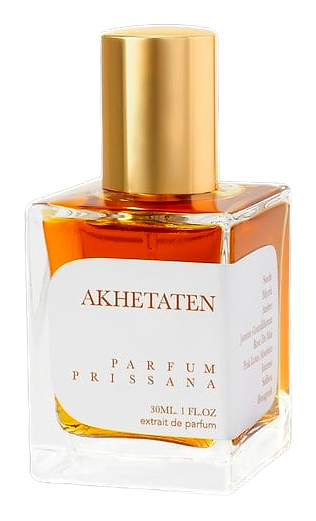
PrissanaParfums Prissana emerged in 2018 as a niche house that blends Mediterranean lineage with contemporary storytelling. The brand offers a compact catalogue of single‑note or concept‑driven scents, each anchored by a clear narrative. From the desert‑inspired Akhetaten (2023) to the forest‑rich Hirun (2024), Prissana invites collectors to explore places and memories through scent. The line balances bold compositions with restrained packaging, positioning the house as a quiet but confident voice in modern perfumery.
The Creator
Prin LomrosLomros favors a minimalist palette that highlights contrast. He often pairs bright, bitter black tea notes with deep, earthy bases, creating a bridge between light and shadow.