
The Story
Why it exists.
The beginning
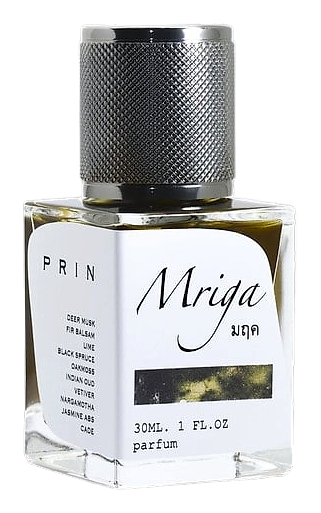
Mriga means deer in Sanskrit. The name draws on a mythic quality, a creature caught between the wild and the poetic. It's not a literal interpretation of any animal, but a sensory one, a way of framing what the wearer encounters on their skin: something alive, something that shifts, something that resists being pinned down entirely.
The synthetic deer musk accord is the center of everything. Animalic materials have always divided wearers, too harsh, too dirty, too much. Lomros sidestepped the problem entirely by using a synthetic that captures the subtly sweet, powdery, furry qualities of real musk without the sharp edges. Jasmine and rose amplify the scent's warm pull, while the base materials give the composition a grounded, natural-feeling backdrop that makes the animalic qualities feel deliberate rather than accidental.
The evolution
The opening arrives green and bright. Lime zest, fresh-cut grass, a whisper of evergreen. Within minutes the deer musk asserts itself, sweet, powdery, with that distinctive furry quality that separates this from any generic musk. The heart unfolds as jasmine and rose join, cushioned by labdanum's resinous warmth. Vetiver, oud, and sandalwood build the woody architecture. Then the drydown takes over: peat and oakmoss create a forest-floor atmosphere, conifer notes linger, and the musk accord, still present, still intimate, weaves itself into the wearer's skin rather than projecting outward. What surprises: the animalic doesn't fade. It softens. Settles. Becomes part of the wearer's warmth rather than announcing itself.
Cultural impact
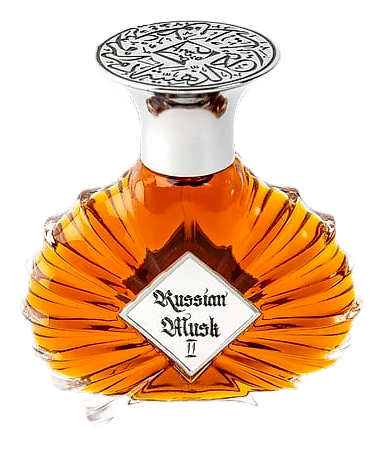
Mriga entered a conversation about synthetic animalic accords and what they can achieve. For wearers who wanted the depth of deer musk without the ethical complications, it offered a new possibility. The fragrance earned its place in the animalic conversation alongside Areej Le Doré's Russian Musk series, not by imitating, but by offering a different forest to get lost in.