
The Story
Why it exists.
The beginning
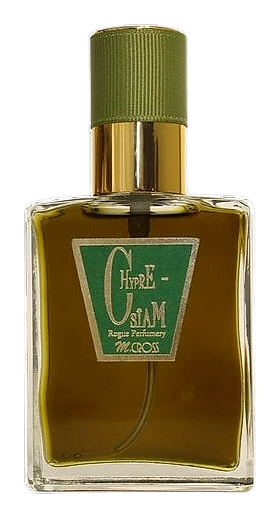
Chypre-Siam exists because Manuel Cross smelled two things at once. In 2012, he'd sampled Coty's original Chypre, the one that defined a genre, the framework underneath decades of great fragrances. He loved it. Then, a turning point: picking kaffir lime leaves for a curry his wife was making, their bright fragrance instantly triggered the memory of that Coty sample from days prior. That was the hook. But it was what came next that made the fragrance. Across the yard, jasmine blossoms were drifting on the evening air. Kaffir lime and jasmine, growing side by side. That's when Cross knew he wasn't going to recreate the original Chypre, he was going to recreate the experience of it, drawing on the bright, tropical character of Southeast Asian botanicals to reimagine the classic structure.
What makes Chypre-Siam chemically interesting is also what makes it legally unusual. Oakmoss absolute at meaningful doses produces the characteristic chypre depth that modern compliant compositions can only approximate with new molecules, and those new molecules don't smell the same. Civet brings the animalic undertone that defines true chypre structure in the base, not just as a whisper but as a grounding element that gives the florals above it something to stand on.
The evolution
Chypre-Siam opens with the tart brightness of kaffir lime, unmistakable, nothing like standard citrus, grounded immediately by basil's herbal green. As the top notes soften, the composition shifts. Jasmine absolute rises as a hero of the heart, lush and indolic, while ylang-ylang arrives warm and tropical, almost syrupy in its sweetness. The florals don't compete with each other. They layer, creating a middle register that feels both creamy and exotic. The oakmoss decision becomes clear as the heart evolves: this is earthy, resinous, and present, not a whisper but a foundation that anchors the entire composition. Civet adds an animalic layer that the leather anchors without softening. The drydown holds for hours, with longevity that reaches well into the next day on fabric and skin alike.
Cultural impact
As regulations restricted oakmoss, nitro musks, and other cornerstone materials, classic chypre structure became harder to find in anything released after 2000. The style that once ran through perfumery like a spine connecting generations of fragrances gradually disappeared from new releases, leaving collectors with vintage bottles and limited options. A perfumer working outside conventional compliance can recreate the structure that defined a genre, and Chypre-Siam delivers the chypre DNA that Coty's 1917 original helped establish.