The Story
Why it exists.
The beginning
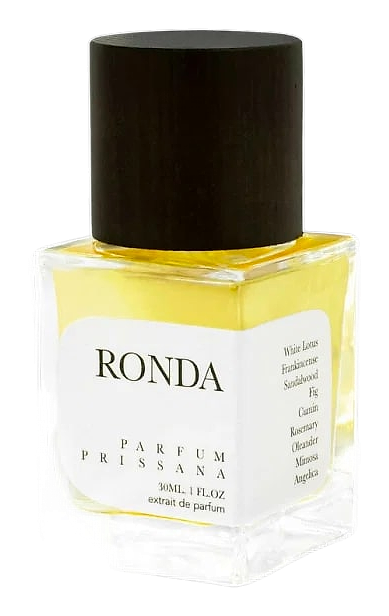
Ronda is a 2024 release from Prissana, composed by Prin Lomros. The composition reads as an olfactive translation of a place, or at least the impression of one: not a postcard, but the sensory weight of stone, resin, and wild growth pressed into a single bottle. Lomros reached for the rugged side of the spectrum, pulling from mountain herbs and the kinds of aromatics associated with old trade routes. Green and spice became the structural spine, the two pillars holding everything else in place. The house frames the fragrance as a tribute to the spirit of Ronda, and the composition delivers on that promise with its layered, almost contradictory green-spice architecture. There's a tactile quality to the way the materials stack, each one refusing to behave like a polite modern accord.
What makes the structure unusual is how aggressively the green and spice elements share real estate across all three phases. Fig and cypress appear in the top alongside angelica, which here anchors rather than whispers. The heart then layers a dense bouquet of materials on top of that opening, including carnation, jasmine absolute, and cumin. The choice signals Lomros wanted something with old-soul architecture, the kind of formula that refuses to edit itself down to a single clean gesture.
The evolution
Angelica announces itself almost immediately, that unmistakable rooty green that smells like crushed celery leaves and wet earth after rain. Cypress sharpens it into something more forested, and the fig sits unripe and slightly bitter underneath, refusing to ripen into jam. The opening carries a vegetal intensity that doesn't apologize for itself. As the composition moves forward, spice arrives not as a gentle warmth but as a full aromatic load, cinnamon, clove, black pepper, and cumin crowding into the spaces the green opened up. White lotus and jasmine absolute keep the profile from going purely savory, but this is not a floral fragrance by any stretch. The florals serve as counterpoints, brief lifts that prevent the spice from collapsing into a single savory register. Eventually the base proper begins to assert itself.
Cultural impact
Ronda occupies an interesting position because of how it handles its green-spice architecture. The fragrance refuses to behave like a modern composition, piling materials into the heart phase rather than paring back, and that refusal gives it a particular kind of presence. Collectors who gravitate toward dense, layered work tend to find a lot to engage with here. The way the materials interact, each note contributing texture and tension rather than melody, sets it apart from fragrances designed for immediate crowd-pleasing projection.