The Story
Why it exists.
The beginning
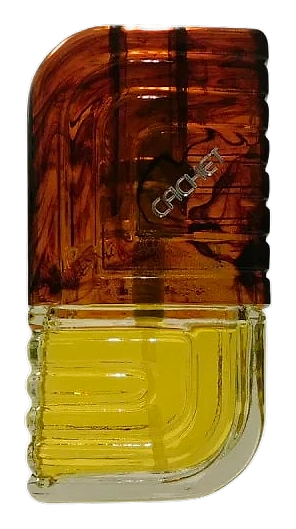
Cachet arrived in 1970, a period when American fragrance houses were consolidating their identities. Prince Matchabelli had spent four decades building a reputation for approachable elegance, scents that carried the weight of European tradition without demanding a collector's budget. Cachet was the house's answer to a specific moment: the end of the sixties, the start of a new decade that wanted confidence without ostentation. The name itself, cachet, means a mark of distinction, a seal of quality. It was a deliberate statement from a house that had always believed refinement should be wearable, not hoarded.
What makes Cachet structurally interesting is its fidelity to the chypre skeleton while introducing aldehydes at the top, a bridge between the powdery florals of the 1950s and the earthier, more animalic compositions that would define the 1970s. The heart doesn't commit fully to floral or green; vetiver and patchouli anchor it in something earthier, while jasmine and rose keep it feminine without tipping into sweetness. The base, oakmoss, civet, leather, amber, musk, is a textbook chypre foundation, built to last. It's a composition that plays multiple eras at once.
The evolution
The aldehydes open sharp and waxy, almost startling in their brightness. Thirty seconds in, galbanum arrives, that green, almost bitter herb that cuts the aldehydic sweetness and reframes it as something more botanical. The green grass note stays close to the surface for the first twenty minutes, giving the opening a crisp, outdoorsy quality that feels nothing like the powdery florals it shares a decade with. Then the heart takes over gradually. Vetiver and patchouli are the first to settle, bringing an earthy, slightly smoky weight that begins to darken the composition. Jasmine and rose arrive more slowly, softening the vetiver's edges. By the second hour, the fragrance has fully committed to its base. Oakmoss and civet lead now, the moss giving that characteristic chypre bitterness, the civet adding an animalic warmth that lingers close to the skin but announces itself on movement. Leather and amber support underneath, giving the drydown a richness that holds through an eight-to-ten-hour arc on most skin types.
Cultural impact
Cachet represents a particular moment in American fragrance history: the late 1960s shift toward earthier, more animalic compositions while retaining a structure that remained feminine and wearable. It found its audience in women who wanted a scent with presence, not the quiet colognes of earlier decades, but something that could hold its own in an era of increasing sensory ambition. The aldehydic top links it to classic powdery florals; the vetiver-patchouli heart places it squarely in the chypre tradition that would dominate the 1970s. It's a fragrance that wears its era without being trapped by it.