The Story
Why it exists.
The beginning
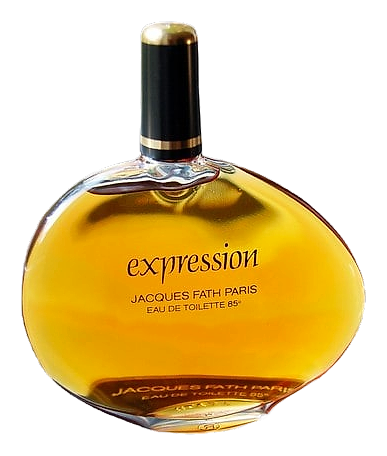
Raymond Chaillan created Expression for Jacques Fath in 1977, a period when the fashion house was still channeling the theatrical exuberance its founder had brought to Parisian couture. The brief, as far as the fragrance world could read it, was to build something that felt both timeless and slightly untamed, a chypre that didn't play it safe. Jacques Fath himself had passed in 1954, but the fragrance division had inherited his instinct for compositions that demanded attention without shouting. Expression became the house's answer to that challenge: a perfume that opened with brightness and ended in warmth, structured enough to wear in a ballroom but irregular enough to intrigue up close.
What makes Expression structurally unusual is the way the honey functions in the heart. Rather than sitting on top as a sweetener, it anchors itself beneath the florals, carnation and rose push through first, with honey arriving as a warm undercurrent that makes everything feel slightly animalic, slightly alive. Galbanum keeps the greens sharp enough to prevent sweetness from winning outright. It's the aldehyde opening that truly sets the tone: that waxy, slightly soap-like brightness that dates the composition unmistakably to the late seventies, when perfumers still trusted aldehydes to carry the first act. In a modern context, it reads as confidence rather than nostalgia.
The evolution
The aldehydes arrive first, bright, shimmering, like light catching the surface of still water. Mandarin and bergamot lift alongside them, giving the opening a citrus clarity that lasts roughly 15 minutes before the florals take over. The honey arrives not as a note that announces itself but as warmth that builds underneath the carnation and rose, making the heart feel almost pulsing. The iris adds a powdery softness that keeps the florals from reading as heavy. This phase lasts the longest, three to five hours of warm, complex depth. Then the base arrives. Beeswax and leather take over, with oakmoss lending that characteristic chypre earthiness that makes the drydown feel like vintage in the best sense. Ambergris adds a slightly animalic, slightly salty depth that prevents the leather from reading as harsh. Patchouli and sandalwood settle underneath, adding creaminess that lingers.
Cultural impact
Expression sits comfortably within the vintage chypre tradition, the lineage that includes Guerlain's Insolence, Givenchy's Ysatis, and the great honey-rose compositions of the late seventies. It's been discontinued for years, which has made it a collector's piece for enthusiasts who track down the rare bottles. What keeps Expression discussed is that unusual arc: aldehydes that feel like a controlled burst, honey that works as depth rather than sweetness, and a leather-oakmoss drydown that arrives late and stays. The composition doesn't chase trends because it predates most of them. For those who seek it out, the payoff is a chypre that feels both structured and alive, the kind of fragrance that rewards wearing rather than just analyzing.