
The Story
Why it exists.
The beginning
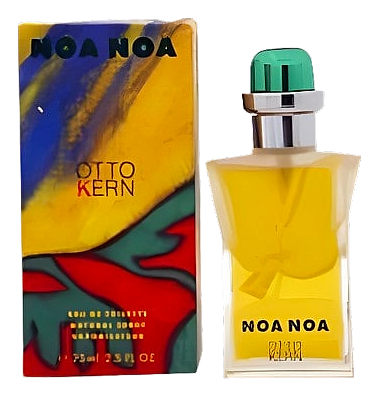
The name Noa Noa carries weight beyond fashion. In Tahitian and broader Polynesian usage, noa describes something uncodified, free from restriction, the word for the sacred made accessible. Gauguin used it as the title of his Tahitian memoir, capturing the scents and sensations of island life that he tried to bottle through paint and memory. Otto Kern's Noa Noa, arriving in 1990, borrowed that same impulse: to translate a place's sensory identity into something you could wear. The tension here is instructive, the fragrance itself is Germanic in its restraint, its fir and powder architecture nothing like tropical abundance. What it shares with its namesake is the attempt to make an idea portable.
The interesting structural choice is the balsamic fir at the heart of what is otherwise a powdery-woody composition. In 1990, women's fragrances tended toward heady florals or fresh greens. Fir in the heart was uncommon, more associated with masculine scents or holiday themed releases. Here it serves as an anchor, something that slows the fragrance down and gives the powder and florals something to settle against. The base compounds this with benzoin and tonka bean, creating a sweetness that doesn't announce itself but lingers close to the skin. This is not a fragrance that projects loudly. It rewards proximity.
The evolution
The opening hits fast and bright. Mint and grapefruit arrive together, with the galbanum adding a green snap that keeps the citrus from being merely sunny. The cassia contributes a warmth that reads as spice rather than sweetness. This opening phase lasts roughly 30 minutes before the heart begins to take over. The transition is where Noa Noa earns its reputation. The fir doesn't fade so much as absorb everything arriving around it. Jasmine and rose appear, but they arrive softened, almost distant, powdered themselves rather than bright. Heliotrope adds a marzipan quality that makes the whole heart read as nutty and warm. The sandalwood and cedar underneath provide structure without asserting themselves. This middle phase occupies the next three to four hours, steady and close. The drydown belongs to the benzoin and vanilla. They wrap around the remaining cedar and oakmoss, creating something warm and resinous that stays close to the skin for another four to six hours. On fabric, it lingers into the next day.
Cultural impact
Noa Noa occupies an interesting position: a designer fragrance from a menswear house, released during the early 1990s when fashion brands were systematically adding perfume lines. The scent skews toward wearers who appreciate restraint, the powder-fir combination isn't for those seeking immediate drama. It rewards patience and proximity, which aligns with Otto Kern's broader philosophy around presentation as a finished whole.