The Story
Why it exists.
The beginning
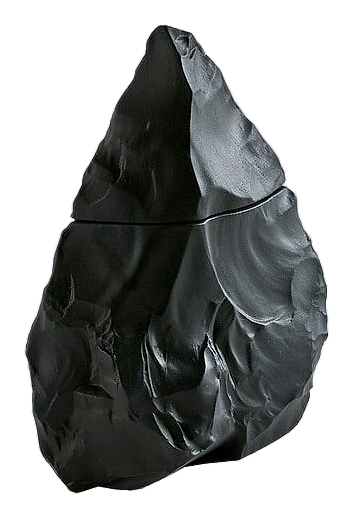
Neandertal Dark arrived in 2015 as a personal project before Neandertal the house existed. Artist Kentaro Yamada was already working through ideas about human exceptionalism, asking what it means to feel small in the story of existence, and Dark was the first material form those questions took. When the brand formalized two years later, Dark became the house's foundation stone, the proof of concept for fragrance as philosophical inquiry rather than decoration. Perfumer Euan McCall built the composition around an unusual constraint: darkness without the expected shortcuts. No heavy smoke. No obvious oud bomb. Instead, warmth earned through hinoki cypress, guaiac wood, and frankincense, a darker that feels earned rather than imposed. One hundred pieces were made. It remains in production, though finding one requires patience.
The note structure is unusual precisely because it refuses the obvious path to darkness. Hinoki cypress brings a Japanese forest stillness that isn't typically associated with heavy compositions. The inclusion of seaweed in the heart, referenced in some sources as a marine/iodine quality, adds something almost mineral, a reminder that the Neanderthals whose name this house carries once lived along coastlines as much as caves. Frankincense and myrrh together create a resinous architecture that reads as ancient without tipping into cathedral cliché. The base layers oud with labdanum absolute, a combination that produces animalic depth without requiring the wearer to navigate skatole or fecal indoles directly.
The evolution
The opening arrives with real aggression, green, leafy, almost vegetal. Tomato leaf and violet leaf give it a crushed-vegetation intensity that some find bracing and others find confrontational. Grapefruit and pink pepper try to lighten it, but the foliage accord is dominant. This phase lasts roughly 20 to 30 minutes before the character begins to shift. The heart phase introduces incense and leather as the primary actors. The seaweed note, if present, adds an iodine quality that some wearers describe as marine or even slightly fishy. This is where opinions diverge sharply. The incense builds, the leather dries, and the composition becomes something that no longer resembles a fragrance trying to smell pleasant. It smells present. Almost physical. The heart holds for several hours. The drydown is where Neandertal Dark earns its reputation. Oud and labdanum absolute take over, with vetiver, cedar, patchouli, and sandalwood providing the structure. Musk and vanilla appear in the distance, warming what could otherwise read as purely austere.
Cultural impact
Neandertal Dark occupies an unusual position: a fragrance that predates its own house, released into a market that wasn't quite ready for conceptual perfumery when it arrived in 2015. The house formalized two years later, but Dark had already established the template, fragrance as inquiry, not aspiration. Within the niche fragrance community, the fragrance has developed a reputation for dividing opinion sharply. The seaweed-incense heart phase produces strong reactions: some wearers find it hypnotic, others describe it as challenging. This polarization is arguably the point. Neandertal's philosophy centers on the invitation to feel small, briefly, and find that exhilarating rather than diminishing.