The Story
Why it exists.
The beginning
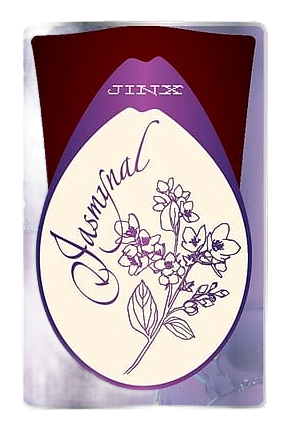
Arthur Clayton Emrick didn't name this one for subtlety. Jasmynal takes the jasmine note, the one that shows up in half the floral fragrances ever bottled, and pushes it into territory most houses wouldn't touch. The perfumer behind Jinx Smells spent over a year developing a nag champa-style incense accord for the heart, working toward something that reads less like perfume and more like a memory of an Indian market at dusk. Spices, smoke, flowers, and the residue of a hundred transactions. The name fuses jasmine with the animal, which is exactly what the composition delivers. The scent leans fully into the jasmine-and-creature tension rather than smoothing it away, letting the floral sweetness collide head-on with musk, castoreum, and a dense oud base.
The listed ingredients come from three distinct geographies: Siberian deer musk, Sumbawa oud, Mysore sandalwood. That sourcing tells you something about intent. Each material was chosen for density, not delicacy. The cocoa and tonka bring edible warmth without sweetness. Frankincense and tobacco sit alongside the nag champa-style accord Emrick spent over a year refining. And then there's the castoreum, beaver tail oil, and that Siberian musk grounding the whole thing in something feral. It's a pyramid that could collapse into mud if assembled carelessly. Instead it holds.
The evolution
The opening doesn't ease you in. Bay leaf and black pepper hit first, sharp and herbal, with a warmth underneath that hints at what's coming. Within minutes, the jasmine surfaces, but not as a clean soliflore. It's been dragged through cocoa, tobacco, and tonka, and it smells like that. The incense accord builds through the first hour, casting that nag champa haze over everything. As the second hour rolls in, the animalics surface. The castoreum and Siberian musk stop hiding. They become the base on which everything else rests, warm and dense and unmistakably alive. By hour four, the florals have receded and the composition has settled into oud, cedar, and musk. It doesn't fade so much as harden. The later stages feel mineral and resinous, almost geological, as though the fragrance has sunk into something permanent rather than dissipating into air.
Cultural impact
Jasmynal sits at the intersection of niche floral and full-throttle animalic perfumery. The fragrance wears like a statement piece rather than a daily habit, and the people who reach for it tend to already know what they want from scent. It's a composition that uses jasmine as a launching point rather than a destination, pulling the flower through smoke, cocoa, musk, and oud until the original floral reads almost unrecognizable. For anyone drawn to perfumery that prioritizes material density over approachability, Jasmynal offers an unfiltered look at what happens when a house commits fully to its raw materials.