
The Story
Why it exists.
The beginning
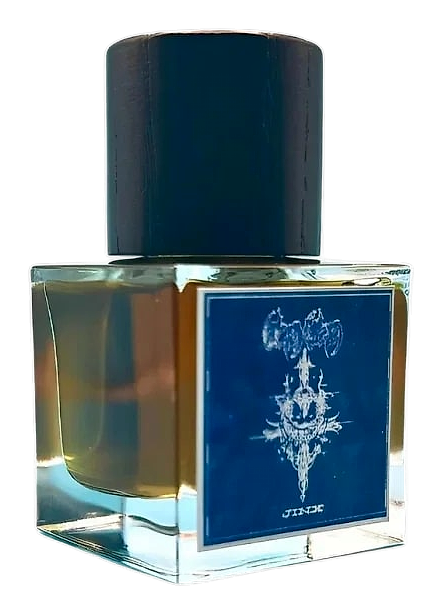
Blue Chyp arrived in 2024 from Arthur Clayton Emrick and Jinx Smells, a small niche perfume house. Emrick set out to construct a Russian-style chypre, that architectural blend of moss, rose, and animalic backbone, but lit from a cooler, almost aquatic angle. The result was a fragrance that opens with maritime pine and aldehydes, then threads blue lotus and Bulgarian rose through a birch-tar spine. The maritime pine reads resinous and bracing, carrying a green-cold quality that hints at water without sliding into anything overtly oceanic. The Bulgarian rose arrives with a powdery softness, and the blue lotus adds an indolic, almost narcotic sweetness beneath the florals.
The composition draws on a Russian chypre blueprint, layering maritime pine for that cold, resinous opening, blue lotus for its indolic narcotic sweetness, and Sri Lankan oud as the dark anchor. Birch tar does heavy lifting too, smoking through the heart with a charred, almost rubbery persistence that refuses to fully dissipate. Bulgarian rose and neroli bring a powdered lift to the upper register, while aldehydes flash across the top in a clean, soapy brightness.
The evolution
The aldehydes arrive first, sharp and almost metallic, catching the neroli and bergamot in a bright, soapy flash. The maritime pine emerges quickly, resinous and bracing, carrying that green-cold quality that reads almost aquatic without ever tipping into oceanic cliché. The rose comes next, Bulgarian and a touch powdery, but the birch tar curls around it early, adding a smoked-rubber edge that makes the florals feel dangerous. The blue lotus does its quiet narcotic work underneath, sweet and slightly animal, threading through the heart with an indolic hush. As the composition settles, it tilts earthward. Oakmoss thickens into the base, Russian castoreum brings its leathery warmth, and the civet shows up like an uninvited guest who ends up being the best part of the night.
Cultural impact
Blue Chyp rewards wearers who already understand what oakmoss and civet can do in tandem. The birch tar and maritime pine give it enough edge to intrigue those less familiar with animalic perfumery, while the blue lotus sweetness and aldehyde sparkle offer a softer entry point. The composition wears close to the skin in its later stages, intimate and mossy, with a smoked warmth that lingers on fabric long after the sillage has pulled inward. It reads as a fragrance for slow evenings and colder weather, the kind of release that asks to be revisited rather than worn casually.