The Story
Why it exists.
The beginning
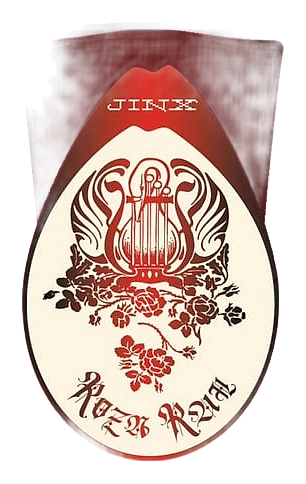
Arthur Clayton Emrick built Roza Ruh around a particular obsession: low-temperature, new-generation oud oils with a camphoric backbone. Sourced from Ensar and Jinkoh stire, the oud here isn't the barnyard, barnacle-encrusted variety that dominated older Middle Eastern compositions. It's clean, sharp, almost mentholated, and Emrick leaned into it deliberately, framing the rose as a way in and the camphor oud as the destination. Released in 2022 through Jinx Smells, the perfume reads as his answer to a question few niche houses bother asking: what does rose oud look like when you strip out the funk and keep the bone structure?
The unusual move here is the frankincense. Emrick layered several varieties, both oils and tinctures, specifically to amplify the camphor already living inside the oud. That's not standard rose-oud architecture, where incense usually arrives as sweetness or resinous depth. Here it arrives as coolness, almost menthol. Saffron and cypress smooth the edges, clementine adds a citric lift that keeps the florals from sinking too fast, and the result is a composition where every supporting note is doing structural work, not decorative work. The rose trio (Moroccan, Turkish, Taif) is treated less as a bouquet and more as a single saturated chord that the oud cuts through.
The evolution
The first thirty minutes are deceptively conventional. Bergamot and palisander rosewood give it a polished, slightly creamy entrance. The rose arrives fast, bright, almost candied, and a non-specialist wearing this at a department-store counter would assume they were dealing with a fairly traditional floral oriental. Then the camphor oud starts to surface. There's no dramatic transition, no harsh pivot. It just gets colder. The rose doesn't disappear; it thins out, stretches, becomes more about the stem than the petal. By the two-hour mark the saffron has sunk into the base, the clementine is a memory, and what's left is a dry, smoky, faintly metallic oud-woods accord with rose draped over it like fabric catching wind. The drydown is the longest phase and the most rewarding. Cambodian and Indonesian oud, sandalwood, Tibetan musk, and white ambergris settle into a close-skin warmth that lingers well into the next morning. On fabric, traces survive a wash or two. On skin, expect roughly six hours of honest wear with another two to three of ghost.
Cultural impact
Roza Ruh's particular appeal lies in how it handles the rose-oud conversation without defaulting to the heavier, more aggressive templates the genre is known for. The composition opens with a clarity that feels almost inviting, a bright top accord that makes the oud's eventual emergence feel earned rather than imposed. As the fragrance develops, the rose and oud negotiate rather than compete; the rose contributes a petal-soft sweetness that softens oud's sharper edges, while the oud lends a smoky, slightly animalic gravity that keeps the rose from drifting into simple florality.