
The Story
Why it exists.
The beginning
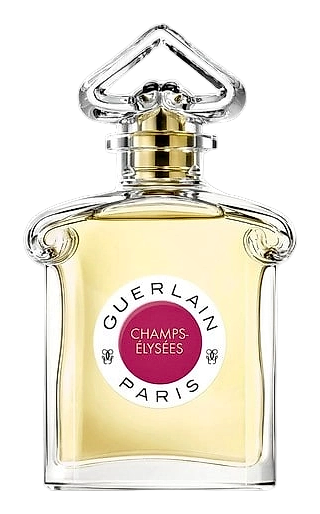
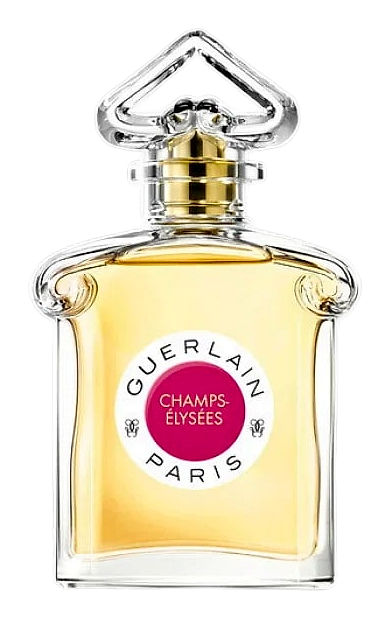
Champs-Élysées launched in 1996, a floral composition by Olivier Cresp that wears its inspiration in the name. The brief was straightforward and a little brave: bottle the energy of Paris's most famous avenue. Not the traffic, not the tourists, but the trees in bloom, the light shifting between storefronts, the particular joy of a Parisian afternoon. Cresp, working within Guerlain's storied tradition, built it around a mimosa overdose. Not a whisper. Not an accent. The mimosa dominates, with rose and almond tree wood serving as the embellishment that shapes and supports it. A mimosa overdose embellished by rose and almond tree wood gives the composition its warmth and its sunny disposition, but the yellow flower is what drives every phase of the wear.
What makes this composition worth a second look is how much space the mimosa occupies. Most florals treat mimosa as a supporting note, a fuzzy yellow texture tucked beneath something more conventional. Here, mimosa leads, and everything else actively performs around it. The peach and melon in the opening create a ripe, cushioned entry that prevents the mimosa from reading dusty. The almond tree wood in the base extends that softness into warmth, so the composition feels like a single gesture rather than a pyramid.
The evolution
The opening is the fruitiest Champs-Élysées gets. Peach and melon sit up front alongside violet and a touch of aniseed, not candied but fresh, like a fruit bowl set on a marble counter. The aniseed adds a cool, slightly herbal edge that keeps the sweetness in check. Then the mimosa takes over, and the fragrance does something most florals don't: it gets warmer without getting heavier. The mimosa is honeyed and almost chewy, but the peach and lilac keep it light. Rose appears mid-drydown, not as a standalone statement but woven into the mimosa's fabric. As the hours pass, benzoin and vanilla arrive underneath, and the almond tree wood deepens the whole composition into something creamier without losing its yellow-flower brightness. The drydown lingers on skin with a warm, slightly powdery, faintly nutty quality, the kind of softness that settles into clothing and stays there.
Cultural impact
Champs-Élysées now sits in Guerlain's Les Légendaires collection, a curated selection of the house's heritage compositions. It draws a particular kind of wearer: someone who gravitates toward warmth and brightness in equal measure, who prefers their florals joyful rather than austere. In a landscape where mimosa is typically treated as a background note, this composition stands as a rare case of a single flower given the lead role. The Les Légendaires placement signals that Guerlain considers the fragrance an important part of its creative legacy, grouped with the house's other landmark compositions.
The House
GuerlainGuerlain stands as one of the oldest and most revered perfume houses in the world, founded in Paris in 1828 by Pierre-François-Pascal Guerlain. What began as a boutique on rue de Rivoli quickly became the preferred destination for Parisian society, attracting dandies and elegant women who sought custom-crafted fragrances. The house's influence grew to such heights that Guerlain earned the title of Official Perfumer to Napoleon III after presenting Eau de Cologne Impériale to Empress Eugénie as a wedding gift in 1853. This royal patronage marked the beginning of Guerlain's enduring association with European aristocracy, as the house went on to create fragrances for Queen Victoria and Queen Isabella II of Spain. Today, under the creative direction of Thierry Wasser, the fifth-generation perfumer, Guerlain continues to shape the landscape of fine fragrance with a portfolio spanning over 1,100 olfactory creations. The house remains headquartered at its legendary Champs-Élysées mansion, a historic monument that anchors Guerlain's position at the intersection of heritage and contemporary luxury.
The Creator
Olivier CrespCresp's signature style often features a blend of fresh, clean notes with warm, comforting accords. He's known for his masterful use of fruit notes, particularly fig and berries, which he often combines with florals and musks to create scents that are both inviting and sophist…