
The Story
Why it exists.
The beginning
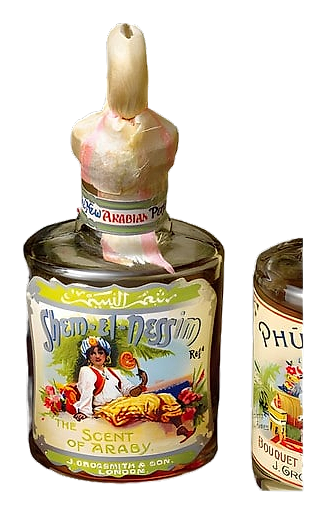
Shem-el-Nessim. Grossmith released it in 1906, the name drawn directly from the Egyptian spring festival it references, a celebration marking the turn of season. The composition carries that same idea at its core: not the heat of summer or the stillness of winter, but the moment between, where cool air gives way to warmth. Orris root anchors the structure, sitting at the center the way a steady foundation supports a building. Around it, a bouquet is arranged with notable restraint. The result is a floral that doesn't chase attention. It simply keeps going while louder compositions fade. There's an old-world formality to the way this fragrance presents itself: composed, polite, never raising its voice above the conversation.
Orris root is among perfumery's most labor-intensive ingredients. It comes from the rhizome of the iris, dried for years before it releases that violet-powder aroma. Surrounding it here is a deliberate architecture: neroli and bergamot provide an opening lift that never feels sharp, then ylang-ylang, jasmine, geranium, and rose build a full floral heart. The base pulls in an unusual mix: sandalwood and cedar for structure, patchouli for warmth, heliotrope for that almond-powder sweetness, and vanilla to round it all off. Every layer earns its place. Nothing is decorative.
The evolution
The opening minutes are almost weightless, neroli and bergamot catching like sunlight on a cool morning. The orris arrives honestly: powdery, rooty, that warm-violet hush that no synthetic has quite managed to replicate. The florals bloom alongside it. Rose in small doses, jasmine darker than expected, geranium pulling the whole arrangement slightly toward soap and spice. There's a density here that feels intentional, like a room full of people you actually want to talk to. As the hours pass, the orris softens, and the base notes take over the architecture: sandalwood and cedar quietly holding the floor while patchouli threads through, dry and grounded. The heliotrope contributes that marzipan-adjacent sweetness, and vanilla arrives not as dessert but as something more like warmth you can almost feel against the skin.
Cultural impact
Shem-el-Nessim holds a quiet place among turn-of-the-century florals, a category that also includes several landmark compositions from the same period. The fragrance sits comfortably within that early-twentieth-century tradition of powdery, orris-centered florals that defined an era of perfumery. It runs slightly warmer than some of its contemporaries, with the heliotrope and vanilla doing work that gives it a softer, more rounded character. It's the kind of fragrance someone reaches for when they want to feel composed without feeling rehearsed.