John Lipscomb Grossmith
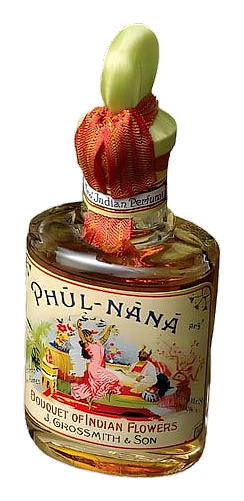
John Lipscomb Grossmith inherited his father's perfume house at a time when London perfumery commanded the world's attention. Born into the family that established J. Grossmith & Son in the City of London in 1835, he trained as a perfumer in Grasse, the ancient capital of French fragrance craft. This grounding in Provençal technique, married to his English lineage, shaped a house sensibility distinct from its Continental rivals. He steered the business until 1919, a tenure spanning the late Victorian era, the Edwardian age, and the upheaval of the Great War. Among his most distinctive achievements was a perfume inspired by Shem-el-Nessim, the ancient Egyptian spring festival. In 1906, captivated by this celebration of renewal, he translated its floral and ritualistic essence into a fragrance bearing the festival's name. His leadership also saw the firm expand its reach into branded lines such as Phul-Nana. Photographs from around 1902 capture him at the height of his powers, presiding over a London workshop that supplied perfume to some of the most discerning clients of the age.
The hits
Notable creations
The signature
How John composes
Grossmith's compositions draw on a classical English-French vocabulary. He worked fluently with Grasse absolutes, rose and jasmine among them, alongside the richer, heavier materials of the older perfumer's tradition: resins, ambers, and spices. The Shem-el-Nissu composition demonstrates his gift for capturing a seasonal mood, a green and blooming warmth suggestive of springtime renewal. His branded work, including Phul-Nana, shows a turn toward lighter, more accessible florals suited to perfumed soaps and toilet waters. Yet his signature remained rooted in extraits of considerable depth, where natural ingredients were given room to unfold rather than masked by novelty. The house style under his direction favored generous proportions, slow development on the skin, and compositions that felt crafted rather than manufactured. He preferred the patience of traditional extraction to the shortcuts of an emerging industrial age.
Philosophy
What drives John
Grossmith believed a perfume should carry the weight of its origin. He looked beyond the prevailing fashions of London drawing rooms and sought inspiration in older, deeper traditions, from Provençal fields to the banks of the Nile. His creative compass pointed toward heritage and cultural memory rather than novelty for its own sake. The Shem-el-Nessim creation reflects a conviction that fragrance is best understood as an echo, something that revives a moment, a place, a season already half-remembered. He valued the patience required to blend classical floral absolutes with the resinous materials of the historic perfumer's palette. For Grossmith, a house that traced its roots to 1835 carried an obligation to honor craft over commerce, to let the composition speak before the label did.
The houses