The Story
Why it exists.
The beginning
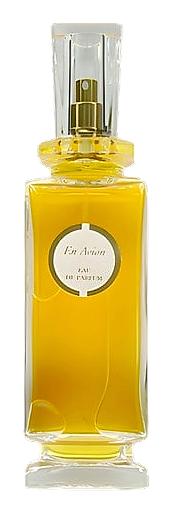
En Avion, French for "by plane," was composed by Ernest Daltroff, the perfumer who founded and shaped the house of Caron. Daltroff was known for his unconventional approach to composition, treating fragrance materials as sculptural elements to be placed against one another in unexpected ways. The bottle, designed by Félicie Wanpouille, Daltroff's creative partner and the house's longtime bottle architect, became one of the most distinctive designs in early twentieth century French perfumery. Wanpouille treated each Caron flacon as a small piece of industrial design, and the En Avion bottle reflected that conviction. The name itself was a deliberate gesture, evoking speed, altitude, and the romance of flight at a moment when aviation was reshaping how people imagined distance and desire.
Daltroff composed En Avion around a carnation and neroli tension that gives the opening its unusual bite. The carnation arrives with a peppery, clove-like heat that feels almost raw, and the neroli cuts in with a clean, slightly bitter citrus edge that keeps the spice from going heavy. The composition folds in lilac and jasmine for a white floral softness that almost misleads you, a powdery, almost cosmetic lift that softens the carnation's edge before the base pivots hard. Opoponax grounds the formula in a smoky, incense-like warmth that lingers for hours.
The evolution
The first fifteen minutes are all carnation, sharp and clove-edged, rolling over neroli and a dark orange note that reads closer to bitter marmalade than fresh juice. There's a faint green snap somewhere in the top, almost like crushed stems, that keeps the opening from going sweet. By the thirty-minute mark, the neroli recedes and the white florals take over: jasmine comes in thick and indolic, creamy rather than green, while lilac adds a powdery, almost cosmetic lift that softens the carnation's edge. The shift from spicy to creamy is quick, maybe too quick to notice if you're not paying attention. After two hours, the opoponax begins its slow takeover. The jasmine thins to a memory, and the base reveals itself: a smoky, balsamic warmth that smells like a church candle lit in a quiet room, with amber underneath giving it body.
Cultural impact
En Avion was composed by Ernest Daltroff, with the bottle designed by Félicie Wanpouille, his creative partner and the house's longtime bottle architect. Wanpouille was known for treating each Caron flacon as a small piece of industrial design, and the En Avion bottle reflected that conviction. The fragrance took its name from the early twentieth century fascination with flight, a period when aviation was reshaping how people imagined distance, speed, and possibility. En Avion became one of the house's most recognizable compositions, and the bottle itself remains a sought-after object among collectors of vintage French perfumery.