The Story
Why it exists.
The beginning
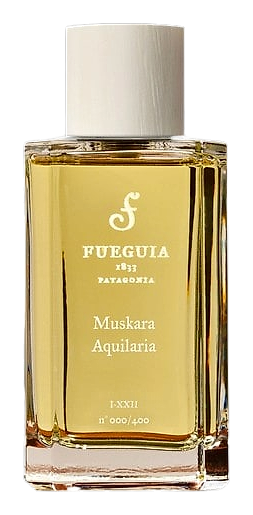
Julian Bedel launched Muskara Aquilaria in 2022 as part of the Muskara collection. Aquilaria is the species of tree that, when infected, produces agarwood, the raw resin that becomes oud. The fragrance is Bedel's research project on that material, assembled from four South Asian sources: Assam, Burma, Laos, and Thailand. Each contributes a distinct raw material to the composition, treated on its own terms rather than blended into a homogenized accord. Bedel bottled it in a small batch of 100, sold exclusively through the Milan gallery, which signals the scale and the venue where the work was meant to be encountered.
Muskara Aquilaria does without a loud supporting cast. Four regional ouds sit beside a genuine musk accord, and the composition allows each material room to register on its own. Assam, Burmese, Laotian, and Thai ouds enter the blend as distinct ingredients, and the musk serves as connective tissue rather than a dominant top note. The four regional sources were chosen as a deliberate survey, a comparative study of how agarwood expresses itself across geography. Read individually, each origin carries its own grain, its own density, its own temperature.
The evolution
The first ten minutes are the loudest this gets. A resinous heat arrives immediately, animalic and slightly fecal in the way real agarwood is, the kind of scent that announces itself on a wool collar. Within thirty minutes, that edge recedes. The musk steps forward, and the composition settles into something warmer, creamier, almost powdery. Hours three through six belong to the wood: a dry, quiet oud that sits close to the skin and reads more animal than aromatic. By hour eight, what remains is a faint musky-woody trace, the kind you catch when you move your wrist. The drydown compresses rather than expands, pulling the materials inward until they rest in the folds of fabric and the warmth of pulse points. On a second wearing, the same arc plays out, though the opening heat feels slightly less sharp and the musk arrives a few minutes earlier.
Cultural impact
Muskara Aquilaria offers something the wider oud conversation rarely provides: a direct comparison of four regional agarwoods within a single composition. Most oud-focused releases commit to one origin or one house style, which leaves the comparative work to specialists and collectors. By placing Assam, Burmese, Laotian, and Thai ouds side by side under a shared musk accord, the fragrance makes regional differences legible to anyone willing to pay attention. The small-batch scale, one hundred units sold through the Milan gallery, places it firmly outside mainstream distribution, and that scarcity shapes who encounters the work.