
The Story
Why it exists.
The beginning
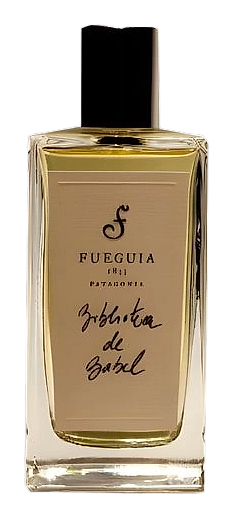
Jorge Luis Borges imagined a universe made entirely of hexagonal rooms, each containing every book that could ever be written. Every combination of letters, every thought that was or will be, somewhere in that infinite maze, it exists. Julian Bedel took that concept and asked: what would such a place smell like? Not the fantasy of libraries, but the real, physical weight of them. The cedar shelves, the leather bindings, the ink that dried centuries ago on pages no one has turned in a hundred years. This is what Biblioteca de Babel answers.
The composition leans into materials that carry history in their grain. Chilenean cedar isn't a generic wood note, it's the specific density of Patagonian forests, where trees grow slow and tight, absorbing cold and altitude into every ring. Mahogany brings the warmth of polished furniture, the kind that survives fires and inherits through generations. Cinnamon grounds the whole thing with a spice that reads more like memory than ingredient, sweet, almost edible, but never quite. Three materials, three textures, one idea: a place that has always existed and will never stop.
The evolution
The opening doesn't announce itself. Cedar arrives quiet, almost apologetic, then deepens as it meets skin. Within twenty minutes, the mahogany surfaces, darker, resinous, the smell of furniture in rooms where the curtains stay closed. The transition isn't dramatic. It's more like realizing you've been reading for an hour without noticing. Cinnamon appears around the forty-minute mark, threading through the wood like a margin note. By the third hour, the composition settles into something close to powder, the dust of pages, yes, but also the particular warmth of old paper catching late afternoon light. On fabric, this one lasts. Eight hours, sometimes more, with a sillage that stays intimate. The kind of projection that someone standing close will notice, but someone across the room won't.
Cultural impact
Part of the Literatura collection, Biblioteca de Babel occupies a specific niche: fragrance for readers, for those who find something sacred in the smell of old paper. The Borges reference grounds it in literary tradition. It doesn't compete with mainstream woody fragrances, it exists parallel to them, in a quieter library.