
The Story
Why it exists.
The beginning
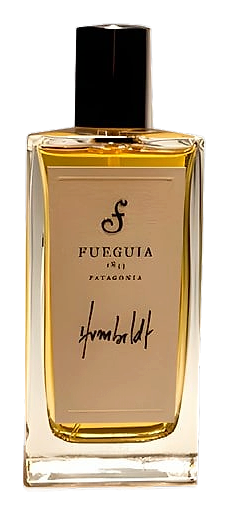
Humboldt takes its name from Alexander von Humboldt, the 19th-century naturalist whose expeditions through South America rewrote how the Western world understood the natural world. Where other explorers catalogued specimens, Humboldt saw connections, the way ecosystems breathe together, the way distance and climate shape every living thing. Julian Bedel built the Personajes collection around figures who changed how we see. Humboldt is the one who changed it most.
The note structure is unusual. Most tropical fragrances lean into sweetness, mango, coconut, vanilla-adjacent florals. Humboldt does the opposite. The bergamot opens sharp and green, almost stem-like. The passion fruit arrives not candy-sweet but tart, amert, with a bitter edge that makes it strange and specific. The tangerine base never fully sweetens. It stays warm, slightly vegetal, closer to dew than to fruit salad. The result is a tropical that smells like somewhere you've never been, not the beach resort version of the tropics, but the actual wild edge of them.
The evolution
The opening is the shortest chapter. Bergamot flashes bright for maybe twenty minutes, then the passion fruit takes over and the fragrance shifts registers entirely. The heart is tart, insistent, almost sour, not the rounded sweetness of passion fruit in most fragrances but the actual fruit, seeds and all. Then the tangerine arrives, earlier than expected, grounding the tartness in something warm. The drydown is close, intimate, not sillage-heavy. It stays near the skin for hours, warm and slightly green, like the air after rain on a coast that no one has named yet.
Cultural impact
The Personajes collection positions each fragrance as a portrait of someone who changed the world. Humboldt, named for Alexander von Humboldt, the naturalist who pioneered the concept of nature as an interconnected system, is the collection's anchor. Wearers describe it as the scent of someone who walks into a room and doesn't need to announce themselves. It has found its audience among those who treat fragrance as a form of intelligence, not decoration.