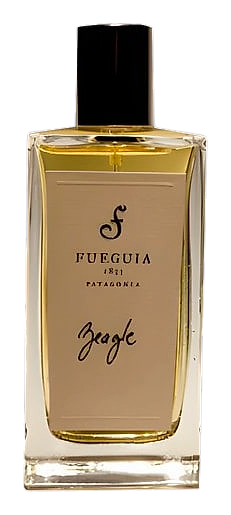

The Story
Why it exists.
The beginning
The composition translates a ship's material reality into scent: the gunpowder stored below decks, the rum ration shared among sailors, the oak and mahogany timber that held everything together. These elements form the backbone of Beagle, a fragrance that captures the texture and weight of maritime hardware. The gunpowder carries its mineral, slightly sulfurous edge. The rum arrives dark and medicinal, a reminder of the naval ration. The timber brings dense, resinous wood with the ghost of the sea still embedded in its grain. Together they evoke the physical presence of a vessel rather than an abstract idea.
What makes this composition unusual is its restraint. The pyramid is almost brutalist in its simplicity, which means each material has nowhere to hide. The oak is not a generalized woody note, it is the specific smell of ship's timber, slightly briny, aged by salt air. The rum is not a tropical cocktail, it is the naval ration, dark and medicinal. The gunpowder is not an abstract smoky accord, it is the mineral, almost metallic signature of sulfur and charcoal. Together they form something that smells like a place and a time, not a mood board.
The evolution
Beagle opens sharp. The gunpowder announces itself first, mineral and slightly sulfurous, like the aftermath of a flint strike. Within minutes the oak arrives, not the polite cedar of a boardroom, but something denser, more resinous, with the ghost of the sea still in its grain. The rum pushes through as a dark, sweet undertone that tempers the gunpowder without replacing it. The two coexist, the rum softening the mineral edge while the gunpowder keeps the sweetness honest. Then the oak takes over completely. It settles into the skin like the memory of old furniture, dry and warm, with just a trace of something almost metallic underneath, the copper fittings, perhaps.
Cultural impact
Beagle appeals to wearers who found mainstream fragrance predictable and sought something with an actual story behind it. The HMS Beagle inspiration is a deliberate move toward the literary-scientific register that defines the house identity. Rather than referencing nature through botanical abstraction, Beagle references history through material specificity. It translates the texture of ship timber, the mineral quality of gunpowder, and the dark sweetness of naval rum into scent, creating something that functions as an olfactory record rather than a generalized mood.