The Story
Why it exists.
The beginning
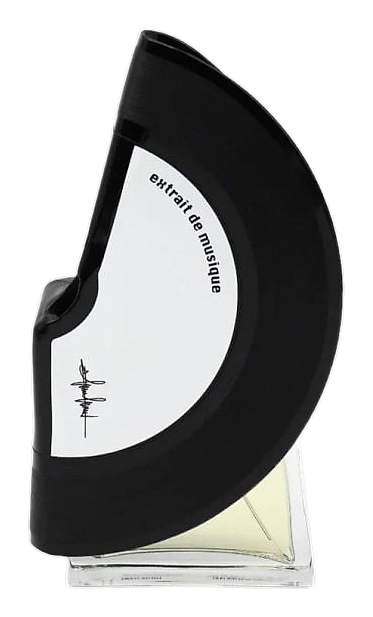
Organ #6 belongs to Filippo Sorcinelli's Extrait de Musique collection, a series of seven fragrances that treat scent as a score the nose reads. The collection frames each release as a musical entry, and this particular piece sits within that lineage. The 'Organ' naming carries an immediate sonic implication, evoking the breadth of a pipe-organ registration rather than the intimacy of a solo instrument. Launched in 2026 as an extrait de parfum, the composition arrives at extrait strength, which means the concentration is dense enough to read clearly on skin without the alcohol-forward lift of a lighter formulation. Within the collection, it sits as a fuller-voiced statement, an accord built to carry across a room rather than hover at the wrist.
What makes the structure interesting is the way the notes are labeled. Sage and sandalwood open as the 'subject' before the lavender, juniper, and nutmeg register as the 'back subject,' with bergamot, mandarin, and lemon leaf arriving as the 'tail.' It is a musical labeling borrowed from counterpoint, and it reframes how you read the pyramid, because the materials you might expect at the top are instead named as the tail, the final phrase.
The evolution
On skin, Organ #6 opens with a sharp burst of lemon leaf and mandarin that reads almost green, like tearing a stem between your fingers. The bergamot follows within minutes, smoothing the edges into something brighter and less herbal, and the citrus cluster settles into a clean, zesty register that lingers at the collarbone. Around the thirty-minute mark, the lavender and juniper berry step forward together, and the scent crosses into familiar fougère territory, clean and slightly sweet, the kind of accord you'd find in an old Italian barbershop. The nutmeg warms the middle without tipping it into kitchen-spice territory, offering a low, golden hum rather than a sharp bite.
Cultural impact
Organ #6 arrives within the Extrait de Musique collection, a series that treats each fragrance as one entry in a larger orchestral statement. Some wearers have drawn comparisons to classic Italian barbershop fougères, and individual responses have mentioned the herbal-powdered quality found in certain Brutus-adjacent compositions, though that parallel comes from personal interpretation rather than any stated lineage. It reads as a contemplative composition, the kind of piece that invites slow attention rather than immediate projection, and it fits naturally into a rotation built around nuance rather than noise.