
The Story
Why it exists.
The beginning
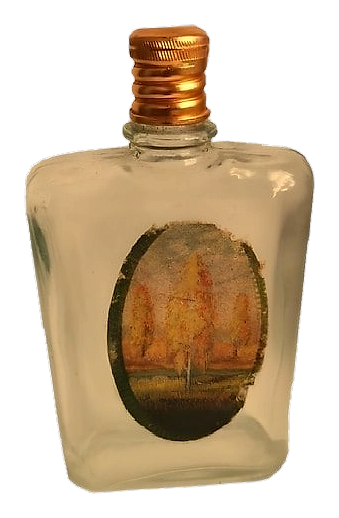
Rudenīgais mežs translates from Latvian as Autumn Forest, a name that places you directly in a Baltic woodscape at the moment the canopy thins and the undergrowth breathes. Dzintars released this odekolon in 1956, during the Soviet era. The Riga-based house had been crafting fragrances through that period, and this particular odekolon draws on its landscape literally: aromatic greens rise from the opening, a damp forest-floor oakmoss anchors the base, and the resinous warmth of tonka and woods threads through the drydown. The Russian-language name, Osenniy les, accompanied the fragrance as it circulated in its original market. As it opens, there's a brisk quality to the top notes, something cool and vegetal that recalls shaded woodland air in early fall.
What makes the structure interesting is how it handles its aromatic-green character while staying unmistakably Eastern European in feel. The herbal heart, anchored by lavender and clary sage, builds a layered aromatic middle that feels both medicinal and rounded at once. Tonka bean contributes a soft, almost gourmand sweetness that balances the cooler herbal notes, keeping the composition from tipping into sharpness. Oakmoss settles into the base, lending a damp, mossy register that grounds everything in an earthy, forest-floor impression.
The evolution
The opening arrives sharp and bright, bergamot cutting first like cold air against your face, then clary sage settling in with its herbal, slightly sweet grip. Orange blossom flits through the first ten minutes, light enough to lift without ever tipping into sweetness. By the half-hour mark the heart takes over: lavender and violet fold together into a powdery, cool aromatic that clings close to the skin. Tonka bean warms the center from underneath, and vetiver pulls the whole arrangement toward something green and rooted, like crushed stems. The base settles slowly over the next few hours, oakmoss doing the heavy lifting. It arrives woody, slightly bitter, and unmistakably forest-floor damp. Musk softens the edges without cleaning them up. On fabric the mossy trace can linger past twenty-four hours, a faint reminder of damp wool and turned earth. The scent doesn't shout. It accumulates.
Cultural impact
Released in 1956, Rudenīgais mežs emerged during the Soviet era as part of Dzintars's growing catalog. Its Russian-language title, Osenniy les, accompanied the fragrance through its original distribution. Today the scent carries a particular nostalgic weight for those who encountered it during that period, a familiar aromatic-green composition that defined a certain everyday grooming ritual. For many, it's the smell of grandparents' vanities and shared bathrooms, a fragrance that was simply present in daily life.