The Story
Why it exists.
The beginning
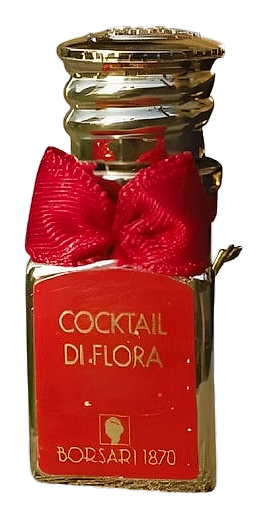
Cocktail di Flora arrived in 1920, a perfume for women composed at a house already established in Italian perfumery. The name translates plainly: a cocktail of flowers. There's no hidden allegory, no exotic locale, no romantic backstory. Just a perfumer mixing the most intoxicating blooms he could find into one extrait and letting them speak over each other. Cocktail di Flora belongs to an older tradition of European perfumery, unapologetically lush, built to be felt rather than analyzed. It earns its place by sheer density. The extrait concentration carries weight on skin, and the floral materials within read as themselves rather than as abstract concepts.
What gives this composition its character is the particular arrangement of flowers within it. There's no aldehyde sparkle, no green or metallic edge to sharpen the petals. It's a white floral composition, and the choice of materials gives it a density that goes beyond simple sweetness. The inclusion of narcissus in the base is what sets it apart, since narcissus brings a green, hay-like, slightly animal quality that adds dimension to the bouquet. Here, it stays. It's the thread that keeps the composition from dissolving into pure sweetness.
The evolution
The opening is an immediate burst of tuberose and jasmine, dense and almost waxy, the kind of arrival that announces itself without preamble. There's no polite citrus top to ease you in. You step directly into the heart of the composition. Orange blossom and ylang-ylang arrive alongside the dominant florals, adding a sun-warmed, almost apricot sweetness that softens the indolic edge of the tuberose. The ylang brings a banana-cream quality that makes the whole thing more wearable on skin. As the composition settles, the narcissus in the base starts to surface, a green, slightly earthy, hay-like note that adds complexity to what would otherwise be a purely sweet arrangement. The gardenia underneath rounds everything into a creamy, lactonic texture that softens the bouquet without diluting it.
Cultural impact
Cocktail di Flora belongs to a tradition of Italian florals that has aged into something quietly collectible. Vintage extraits surface occasionally in collector circles and on the secondhand market, where they find wearers who appreciate the kind of density and conviction that the composition offers. The fragrance has developed a following among people who seek out older extraits and who value traditional floral composition over the lighter, more transparent styles that dominate contemporary releases.