The Story
Why it exists.
The beginning
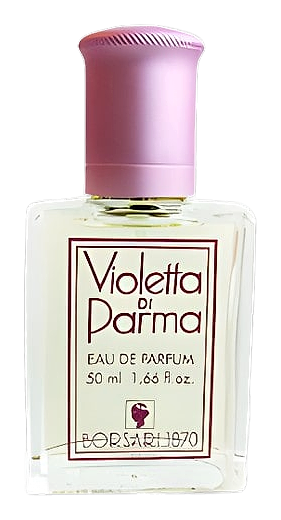
The violet was first distilled by Marie Louise, Duchess of Parma and second wife of Napoleon I, who worked with the monks at the Monastery of the Annunciata to create a personal perfume from natural violet essences. The formula was kept by Ludovico Borsari, who launched Violetta di Parma in 1970, bringing a centuries-old Parma secret into the modern era. Named for the city and the duchess who made violet famous in Emilian perfumery.
Violet soliflores were the grammar of older perfumery, compositions built around a single flower, unadorned. Borsari stayed faithful to that discipline. The pyramid is narrow: iris up top, violet at the heart, cedar and vanilla below. No fudge, no smoke, no tricks. What makes it interesting is the restraint itself, the choice to let violet be violet, rather than padding it into something it isn't. Powder and vanilla soften without sweetening. The iris keeps things cool. It's elemental by design, not by accident.
The evolution
The iris opens cool and papery, that dry, almost mineral quality of the root itself. Not bright. Not juicy. Understated from the first breath. The violet arrives quietly, sweetness tempered by the powdery iris already in place. No sharp transition. The florals at the heart, hyacinth, jasmine, lily, layer in without competing. Each one arrives soft, contributes its texture, and steps back. By the drydown, cedarwood has settled underneath, and the vanilla has crept forward to meet it. The result is a warm, powdery close that stays close to the skin for hours. The violet never fully disappears, it lingers beneath the cedar and vanilla, a thread that runs from opening to final skin-touch. Moderate sillage means it doesn't announce itself. But on skin, it holds its shape for 4-6 hours without ever becoming loud.
Cultural impact
Violetta di Parma carries a specific provenance: the Duchess of Parma herself, Marie Louise, who first distilled violet with monks at the Monastery of the Annunciata. the community describes it as the legendary perfume popular at the end of the 19th century, rediscovered and launched by Borsari in 1970. The formula dates back further than the bottle suggests. For those who seek it now, that gap between the duchess's personal scent and the 1970 release is the whole point: a violet soliflore that survived because someone kept the formula.