The Story
Why it exists.
The beginning
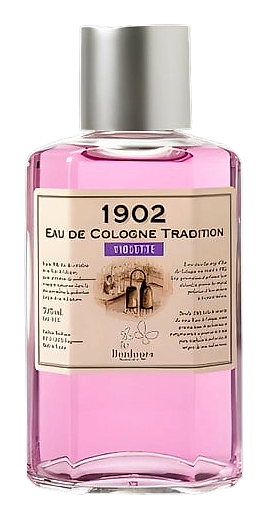
1902 Violette emerged from a house that had only just learned its own name. The fragrance house launched barely a year before this scent appeared, stepping into perfumery and finding its medium. The violet was a deliberate choice: difficult to capture, easier to ruin, almost impossible to make new. Rather than work with synthetic materials that would soon define a generation of florals, the house chose to work with what the violet actually does, its green stems, its powdery petals, its talent for disappearing. The result was a cologne that smelled like the flower rather than like an idea of the flower. One hundred and twenty years later, the formula holds. The challenge of violet has always been that it exists more as a memory than as a note.
What makes 1902 Violette worth knowing is the way it pairs violet with iris and raspberry. The iris adds a powdery depth that keeps the violet from feeling like a nostalgia trick. The raspberry brings a fruity sweetness that feels contemporary without screaming for attention. Together with lilac, jasmine, and the green edge of violet leaf, the composition avoids falling into the most common pitfalls of violet fragrances, where either the powder overwhelms or the freshness never develops into anything more substantial.
The evolution
The opening lasts longer than expected. Bergamot and violet leaf arrive together, bright, slightly green, the smell of stems rather than petals. It takes twenty minutes for the raspberry to settle in, and when it does, the fragrance shifts into its middle register: violet and lilac, powdered by iris, the fruity sweetness now warm rather than sharp. This phase holds for three to four hours on most skin. The jasmine appears briefly, a fleeting floral clarity that passes before you notice it. Then the drydown: musks and opoponax, close to the skin, the almond tree lending a quiet nuttiness that refuses to fully disappear. By hour six the violet is gone but something powdery and warm remains, present enough to notice, intimate enough not to announce.
Cultural impact
Violet has a persistent presence in perfumery that few other floral notes can claim. 1902 Violette occupies a distinctive position, standing apart from contemporary violet fragrances that followed. For those who find most violet scents either too harsh or too fleeting, this composition offers something different, a violet that neither overwhelms nor disappears too quickly. The powdery-iris combination addresses one of the genre's most persistent challenges, creating a violet experience that remains present on the skin without the overwhelming intensity that many seek to avoid.