
The Story
Why it exists.
The beginning
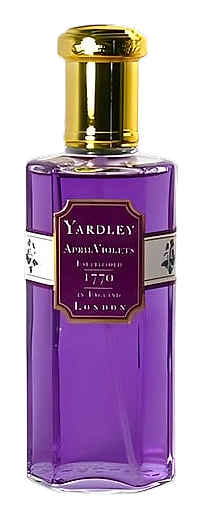
April Violets arrived in 1913 as a declaration of simplicity. While other houses chased complex compositions, Yardley chose one note, violet, and built everything around it. The result was a soliflore that smelled like violet flowers, not violet leaves or violet with accompaniments. It was proper, it was British, and it was unmistakably violet. More than a century later, it remains a touchstone for anyone who believes violet is the most romantic note in perfumery.
The choice of violet as a solo star was bold for 1913. Violet is notoriously fickle in perfumery, it can read green, leafy, or medicinal depending on the extraction. The perfumer's task was to capture violet in bloom, not violet in the garden. April Violets achieves this through a combination of natural violet absolute and what the original formulation called 'the proper amount of warmth' from musk and vanilla. The lily of the valley in the heart acts as a bridge, soapy, clean, slightly sweet, preventing the violet from reading too heavy while keeping the powdery character intact. Jasmine and geranium appear as supporting players, not stars. They add depth without competing for attention.
The evolution
The opening hits immediately with parma violet, sweet, almost almond-like, with none of the green sharpness that puts people off violet leaf. Within minutes, lily of the valley peeks through, adding a clean, slightly soapy floral layer that tempers the sweetness. The jasmine and geranium arrive around the 30-minute mark, but they don't dominate, they support the violet rather than compete with it. By the second hour, musk and vanilla take over, creating a powdery, skin-close drydown that lasts 6-8 hours on most people. The sillage is moderate, this is a fragrance you smell when someone is close, not across the room. The evolution is gentle, linear, and deeply comforting. A true violet soliflore from start to finish.
Cultural impact
April Violets has been in continuous production since 1913, making it one of the oldest women's fragrances still available. It has passed through generations, grandmothers who wore it in the 1960s, mothers who discovered it in the 1980s, daughters who rediscover it today. It's not a fragrance that announces itself; it's a fragrance that rewards loyalty. In a market that churns through trends, April Violets endures because it does one thing exceptionally well: it smells like violet.