
The Story
Why it exists.
The beginning
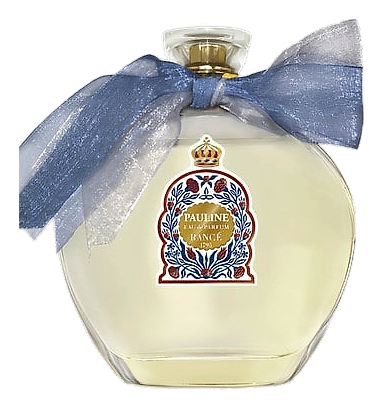
Pauline takes its name and its spirit from the women who have worn Rance 1795 before it, a lineage of wearers who understood that restraint and sensuality are not opposites. The brief was to create something that felt both timeless and deeply personal, a fragrance that would settle into the wearer's skin and become inseparable from her identity. The result is a powdery floral built on a paradox: cool at the opening, warm at the base, with a middle that refuses to choose between elegance and intimacy. This is a fragrance for someone who has nothing to prove and everything to say.
The structure is what makes Pauline distinctive. Most powdery florals commit to one temperature, cold or warm throughout. Pauline refuses. The hooded violet arrives with a crispness that borders on mineral, almost like the scent of cold air on freshly pressed linen. But beneath it, the Indian patchouli adds a green, earthy depth that prevents the violet from reading as flat or one-dimensional. The white Grasse rose that follows doesn't arrive all at once, it emerges gradually, its warmth building as the top notes soften. This slow transition from cool to warm is the fragrance's quiet argument: that powdery florals can be intelligent, not just pretty.
The evolution
The opening announces itself quickly, cotton blossom and Sicilian orange arriving together in a burst of brightness that feels like sunlight through white curtains. This phase lasts roughly thirty minutes, during which the ylang-ylang begins to round the edges of the citrus, softening it from sharp to luminous. The transition to the heart is where Pauline earns its reputation. The hooded violet asserts itself with that distinctive cool-floral character, while the white Grasse rose arrives quietly behind it, not competing but reinforcing. The Indian patchouli threads through both, adding a green, slightly earthy counterweight that keeps the floral from becoming saccharine. By the third hour, the base begins to establish itself, the tonka bean lending its warm, vanillic sweetness while the Siam benzoin adds a resinous depth that feels almost tactile. The Lebanese cedar arrives last and lingers longest, giving the drydown a woody refinement that holds everything together.
Cultural impact
Pauline occupies an unusual position in the landscape of contemporary femininity: it refuses the performative. In an era when fragrances often compete for attention with bold projections and aggressive sillage, Pauline asks to be discovered rather than announced. This is a fragrance that understands the appeal of restraint, not because it cannot project, but because it chooses not to. The wearers who connect with Pauline tend to share a sensibility: they value depth over novelty, and they trust that what is truly elegant does not need to shout.