
The Story
Why it exists.
The beginning
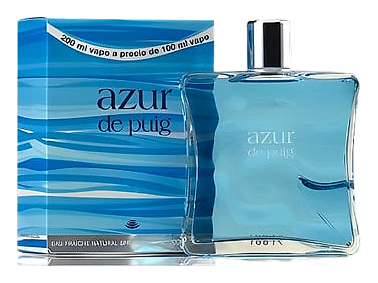
Azur de Puig arrived in 1969 from Antonio Puig, a Barcelona-based fragrance house. The composition announced itself as a fresh-aromatic built around thyme, bergamot, and mandarin, dressed in white florals and grounded by oakmoss and patchouli. That combination of notes sets the tone from the first spray: the citrus gives it lift and brightness, the thyme pulls the whole thing toward something green and savory, and the white florals soften the edges without tipping into sweetness. The oakmoss and patchouli underneath add a mossy, earthy weight that keeps the fragrance anchored to skin rather than letting it float off as a simple cologne. Every element earns its place, and nothing smells like filler.
The composition does something specific with its structure: it lets the herbs lead. Thyme isn't a garnish here, it's the spine, and that structural choice gives Azur a seriousness that simpler citrus colognes often lack. The lily of the valley and jasmine keep the heart from going purely savory, but they don't tip it into perfumery's prettier territory either. The oakmoss-patchouli base adds gravity, a mossy depth that grounds the brightness of the opening and keeps the whole composition from dissolving into air. This is a fresh fragrance with a backbone, not a splash.
The evolution
The first 15 minutes are all citrus snap: bergamot and mandarin bright enough to cut through morning air. Thyme creeps in fast, green and almost peppery, and it stays. The white florals arrive quietly around the 30-minute mark, more texture than statement, like jasmine seen through a hedge. By the two-hour mark the oakmoss and patchouli have taken over the base, giving the whole thing a mossy, slightly earthy weight that the opening never promised. The drydown is warm, herbal, faintly bitter, and it sits close to skin as the hours pass. The thyme weaves through every phase of the wear, never fully disappearing even when the moss and patchouli rise to dominate the base. What emerges in the final hours is a clean, faintly herbal impression, more moss than citrus, more green than bright, the kind of finish that rewards patience over the course of a full day.
Cultural impact
Azur de Puig sits in a quiet corner of fragrance history: a 1969 Spanish fresh-aromatic that earned a loyal following among people who wanted herbs over sugar. The composition reads as a snapshot of late-1960s perfumery, when fresh-aromatic structures were common but rarely executed with this much herbal conviction. Its blend of thyme, bergamot, mandarin, white florals, oakmoss, and patchouli captures a particular sensibility, one that valued green bitterness and mossy depth over the sweeter, more decorative colognes that often surrounded it. It wears well today precisely because it doesn't try to be modern.