
The Story
Why it exists.
The beginning
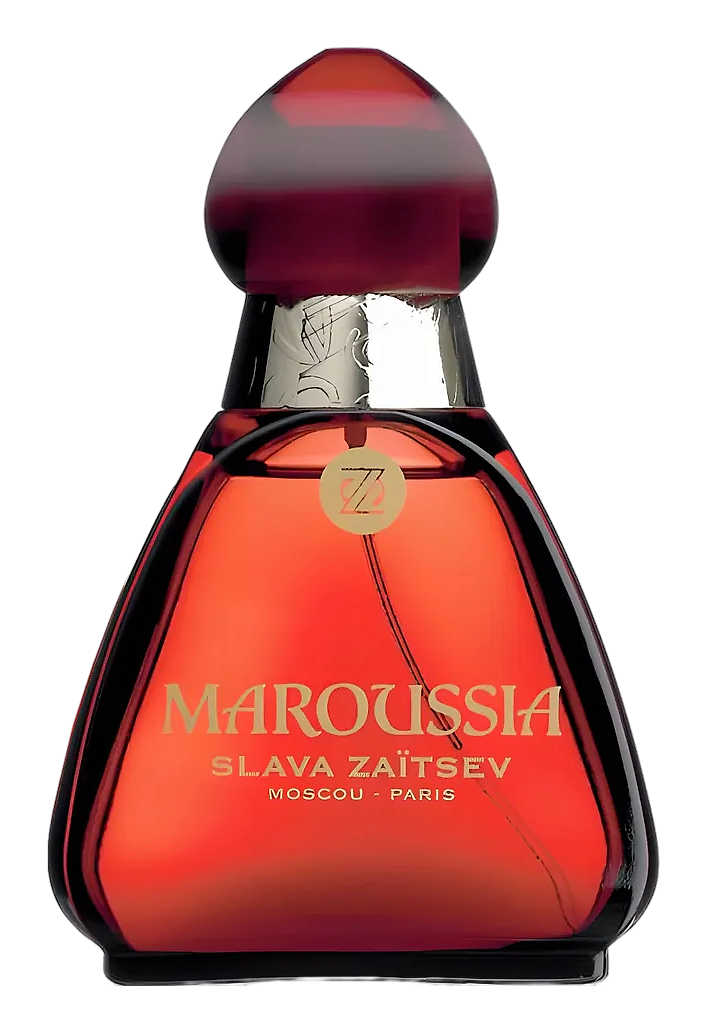
Slava Zaitsev built his name in fashion, drawing attention for decades through his work with actresses, ballerinas, and prominent figures on Moscow's cultural scene. When he turned his attention to fragrance in the early 1990s, Maroussia became his first creation as the Soviet Union dissolved. The name itself is a Russian diminutive, Marusja, a gesture toward the designer who had dressed actresses, ballerinas, and anyone who mattered on Moscow's stages for decades. Zaitsev understood spectacle. His work in fashion had always been about presence, about commanding a room, and Maroussia was designed to do exactly that. The aldehydic opening and dense floral heart reflect a fragrance philosophy rooted in mid-century European perfumery, brought to a newly open Russian market hungry for luxury goods.
The note composition reflects a deliberate approach to capturing the drama of a Russian stage performance. The aldehydic opening mimics the moment curtains part, the white floral heart represents the main act in all its lush glory, and the warm, animalic drydown captures the lingering impression after the final bow. Orange blossom and bergamot open with theatrical brightness. Jasmine, tuberose, and ylang-ylang form the dramatic centerpiece. Musk, amber, and sandalwood provide the warm, enveloping presence that lingers in memory. This is perfumery designed for impact, for occasions where presence matters, for someone who understands that fragrance can be part of a performance.
The evolution
The opening of Maroussia arrives with aldehydic brilliance, a waxy brightness that recalls classic perfumery of the 1950s and 1960s. Orange blossom and bergamot provide the initial citrus lift while peach adds a soft, velvety sweetness. As the aldehydes settle, the heart begins to emerge. Jasmine appears first, creamy and indolic, followed closely by tuberose with its lush, almost coconut-like presence. Ylang-ylang adds tropical depth with a slight spicy edge. Heliotrope and iris introduce powdery, slightly violet facets that create an almost powder-puff quality. Lily of the valley contributes fresh, green notes while orchid adds exotic nuance. Rose weaves through with subtle sweetness. As the florals begin to fade, the drydown takes over. Musk and amber provide warmth and animalic depth. Sandalwood and cedarwood create a creamy, woody foundation. Benzoin and vanilla add resinous sweetness while civet contributes an earthy, animalic complexity. Tonka bean rounds everything with soft coumarin warmth, leaving a intimate, lingering trail.
Cultural impact
Maroussia has quietly built a following among those who appreciate its bold, theatrical character. It's not a bestseller, but those who find it tend to become advocates. The aldehydic structure places it in conversation with the great aldehydic florals that came before, and its character is unmistakably its own. For collectors drawn to unusual fragrances from unexpected places, Maroussia offers something worth seeking out.