The Story
Why it exists.
The beginning
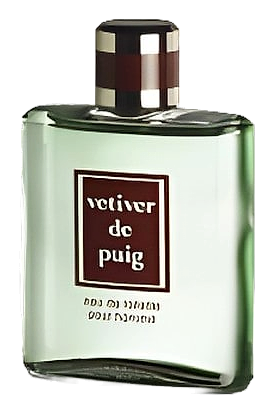
Vetiver de Puig emerged in 1978 from the Spanish house Antonio Puig. The perfumers Alain Muraour and Rosendo Mateu brought their own vision to the work. Vetiver was the central material, treated with an earthier, rootier sensibility than some expected. The character of vetiver is pushed forward rather than softened in the composition. The house approached the material with a distinct perspective, and it shows in every phase of the fragrance. The result is a vetiver composition that stands apart from the French tradition while sharing the same core ingredient. The mineral qualities of the material are given space to breathe, creating a fragrance that feels both familiar and unexpected in its execution.
Aldehydes give the opening a waxy, slightly metallic brightness. Combined with galbanum's intensely green bite, the top is a calculated assault on the senses, sharp, assertive, and uncompromising. The heart introduces carnation and cumin together, an unusual pairing that brings warmth and earthiness where a safer perfumer would have used rose or geranium. This is the choice that divides. Vetiver anchors the entire structure, present from opening to drydown, never fully retreating. It's the thread that makes the composition coherent rather than fragmented.
The evolution
The aldehydes don't linger. Within the first thirty minutes, that waxy metallic quality fades, and galbanum takes its place as the dominant green note, sharp, almost bitter, with citrus holding the brightness underneath. Rosemary and mugwort layer in their herbal complexity, creating an opening that feels like morning in a Mediterranean field. The heart arrives. Lavender leads the fougère structure, carrying its clean, slightly floral composure. Carnation brings an unusual spicy warmth, clove-like without being clove, and cumin adds its darker, earthier dimension. The combination is divisive. Intriguing. The drydown arrives in earnest. Vetiver takes its place as the backbone, not as a passing top note but as the defining anchor that the entire composition was built around. Moss, labdanum, and frankincense deepen the structure, bringing dampness alongside warm resinous depth.
Cultural impact
Vetiver de Puig carved its own territory among vetiver fragrances, finding its own audience since its launch. The aldehydes, the galbanum, the carnation-cumin combination, each choice represents a distinct approach to the genre. Still sought by those who appreciate what it does differently, it offers an alternative to more conventional takes on the vetiver theme. The fragrance appeals to those looking for something that steps outside the expected parameters of the style.