The Story
Why it exists.
The beginning
Pour Lui arrived in 1980 as Oscar de la Renta's first men's fragrance, a deliberate move by a fashion house that had dressed the women beside powerful men for fifteen years, and finally decided those men deserved their own signature. The name itself is a statement: pour lui, for him. The fragrance wasn't designed to compete with the house's signature feminine warmth. It was designed to stand beside it, offering a mirror version, structured, aromatic, assured. The launch came at a moment when men's grooming culture was shifting from aquatic novelties toward something with more substance, and the brand seized that opening with a composition that took its time arriving but refused to leave quietly.
What makes Pour Lui structurally interesting is the aldehyde-lavender handshake at the top, a pairing borrowed from grooming traditions but amplified here with anise and galbanum that add a faint medicinal sharpness. Most fragrances of this era softened as they warmed. This one doesn't: carnation and geranium bloom inside the heart while cinnamon and patchouli introduce a dry, almost dusty spice that reads as intentional rather than accidental. The base, oakmoss, leather, labdanum, is where it earns its age. This isn't warmth that fades. It's structure that deepens, pulling the whole composition toward something that smells like it belongs to a specific kind of person rather than a specific season.
The evolution
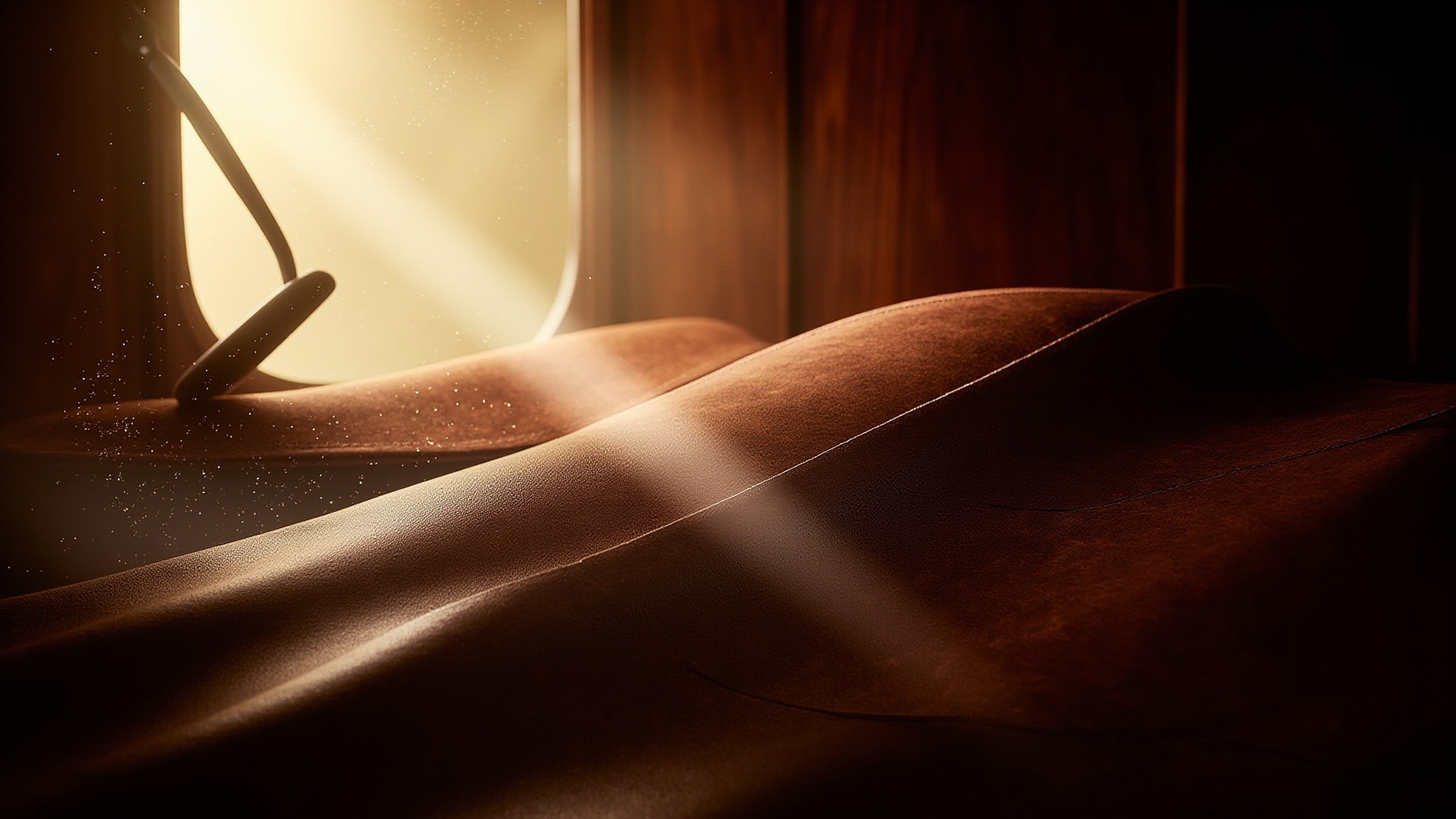
The opening hits bright and almost crystalline, aldehydes lending that sharp, soapy effervescence that immediately signals classic rather than contemporary. Lavender arrives quickly after, and together they create what reviewers consistently describe as barbershop-sharp, the smell of hot towels and good grooming. The bergamot and anise fight briefly for the foreground before settling. Once the heart opens, the composition shifts: carnation and geranium introduce a faint florality that most men's fragrances of this era buried under synthetic strength. Patchouli appears here too, earthy, barely sweet, acting as a bridge toward the base. The drydown is where Pour Lui earns its longevity. Oakmoss and leather arrive and they do not negotiate. On most skin, this phase lasts six to eight hours, edging toward the full ten on the right fabric. The musk and sandalwood soften the leather just enough to keep it from reading harsh, but the oakmoss lingers, the tell that this fragrance belonged to a generation that knew what real chypre smelled like.
Cultural impact
Pour Lui won the Fragrance Foundation's Men's Prestige Fragrance of the Year in 1981, a year after launch. That timing tells you something. The fragrance didn't arrive winning. It arrived quietly, earned its audience through wearing, and was recognized once that audience had grown large enough to matter. Today it sits ranked in the top 500 of enthusiasts's men's fragrance index, sustained by a community that returns to it decades later not because it evokes nostalgia but because it delivers something they haven't found elsewhere: structure that deepens, depth that doesn't grow heavy, and a barbershop edge that holds its own against forty-four years of trend.