The Story
Why it exists.
The beginning
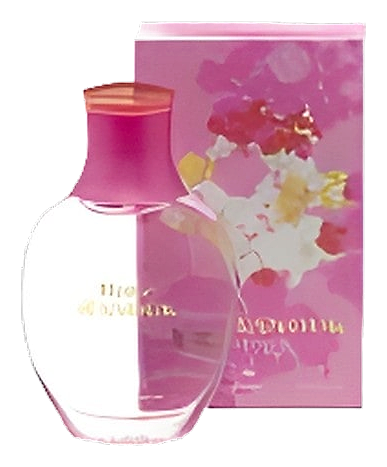
Rose d'Anouk was released by Antonio Puig in 2001, and the composition takes a particular path with rose as its center. The rose here refuses to bloom loudly, holding back where other compositions push forward. Bottle design came from André Ricard, a designer whose spare, functional sensibility shaped the way the fragrance sits in the hand. The glass is meant to feel familiar, something that reads at a glance rather than something that demands attention. You can imagine it resting quietly on a dresser, doing its work without announcing itself, the shape doing what shapes do best when they get out of the way of what is inside.
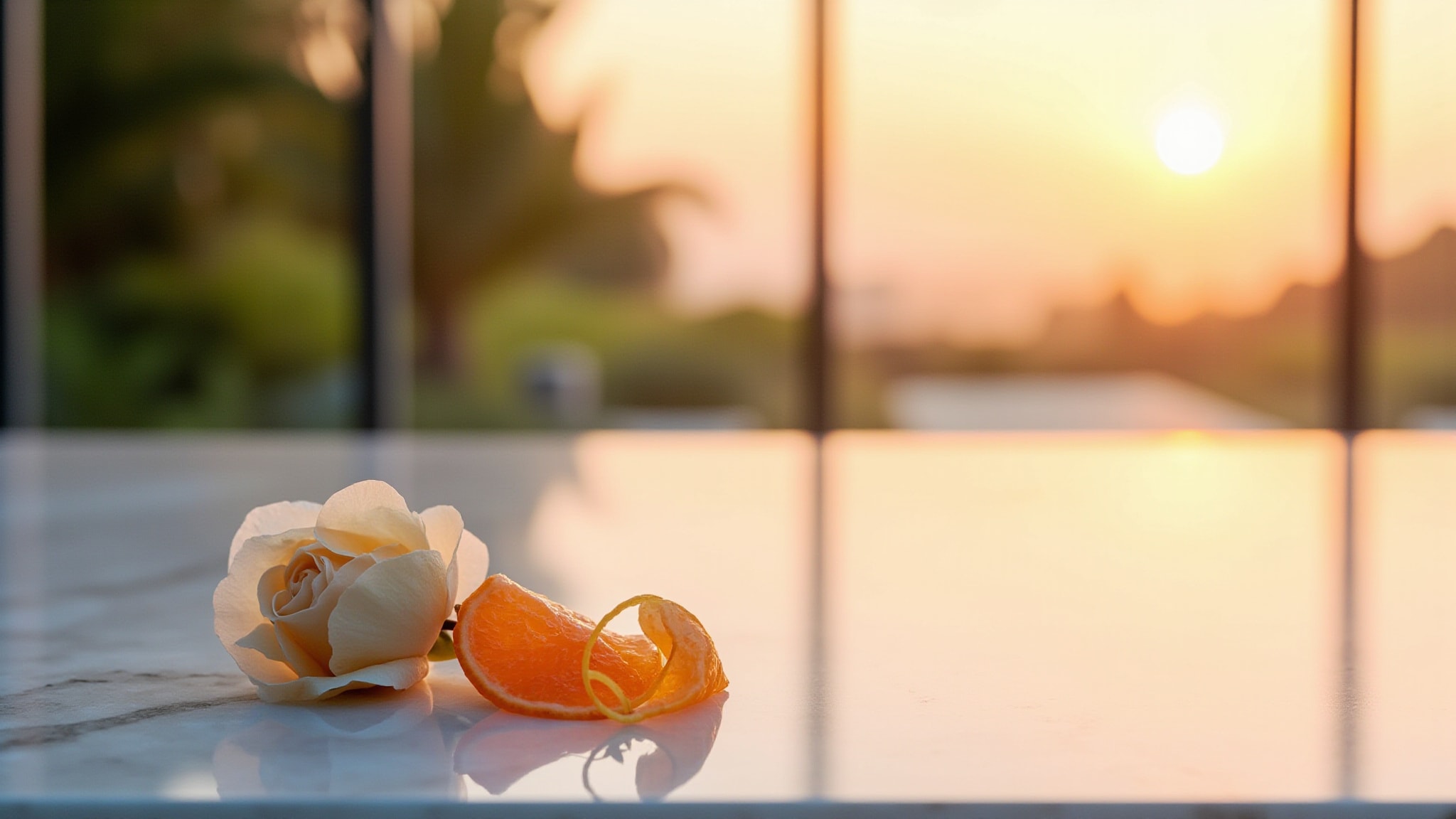
The choice to build a rose around mandarin and violet rather than the conventional pairing makes this composition interesting. Black pepper sits in the middle like a held breath, a small interruption that keeps the florals from drifting. Musk as a sole base note is a commitment to simplicity, a refusal to bury the rose under scaffolding. The result is transparency. You can smell through the rose instead of just smelling it, catching the violet at one angle and the pepper at another, the mandarin flickering between them like light through a curtain.
The evolution
The first 20 minutes belong almost entirely to the mandarin. It opens bright, almost cheerful, carrying a faint sweetness that reads more like a candied peel than a fresh fruit. Not sharp. Just awake. The rose arrives slowly, taking its time because there is nowhere to hide without the typical scaffolding of base notes. Violet joins from the side, powdery and a little soapy in the best way, then the black pepper puts down its weight without burning. An hour in, the composition has found its center: a clean, slightly cool floral that smells like skin before perfume. By hour three or four, the mandarin is gone but the rose holds, and the musk begins to take over. The drydown is the quietest part, intimate and warm against the collarbone, the rose thinning into something that feels more like a memory than a statement, more breath than bloom.
Cultural impact
Rose d'Anouk earns its place as a sleeper among rose fragrances, the kind of composition that rewards wearing more than reviewing. Its stripped-down approach to the rose, built on a skeleton of mandarin, violet, pepper, and musk, has a restraint that holds up across years in a way that louder compositions often do not. The composition does not ask to be the center of attention. It asks to be worn, to sit underneath a coat or against bare skin, to do its work without commentary. There is something generous about a fragrance that does not insist on itself, and Rose d'Anouk carries that generosity into every stage of its wear.