The Story
Why it exists.
The beginning
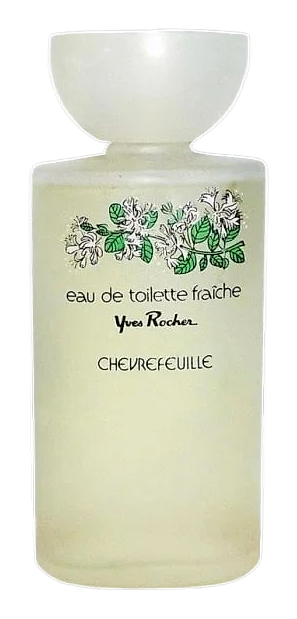
Chèvrefeuille launched in 1976, mid-decade, and its name is French for honeysuckle, which is also the entire thesis of the bottle: one flower, treated simply, nothing dressed up around it. The fragrance reads as a quiet celebration of a single botanical, presented without artifice or conceptual scaffolding. No abstract floral idea here. The real thing, still warm from the sun. Honeysuckle opens with a green, almost leafy sweetness, the kind of scent that clings to fingers after plucking a fresh stem. It feels dewy rather than syrupy, closer to a garden after light rain than a heavy bouquet sitting in a vase. As the hours pass, that bright honeysuckle character holds its shape, softening gradually at the edges while the florals take on a slightly creamy texture.
What's interesting here is the restraint. Two top notes, two heart notes, two base notes. No dense accord pyramid, no hidden supporting cast. Honeysuckle does the heavy lifting, jasmine adds a skin-warm sweetness, and lemon plus orange brighten the edges so the floral never turns heady. The base keeps it grounded: cedar for quiet structure, myrrh acting as fixative more than statement.
The evolution
The first five minutes are the brightest: lemon zest and sweet orange zest hit together, almost effervescent, like pulling a chilled drink into the sun. That citrus brightens and then steps back, around the ten-minute mark, as honeysuckle and jasmine settle into the foreground. The honeysuckle is the star, green and nectar-sweet without going syrupy, and jasmine gives it a creamy warmth underneath. The base doesn't arrive with fanfare. Cedar and myrrh show up quietly around the two-hour mark, the cedar adding a faint dry-wood breath, the myrrh doing its real work as a fixative holding the florals together. By hour three or four the fragrance has gone mostly close-to-skin, the honeysuckle still readable but softer, the cedar now slightly more present. It doesn't project strongly after hour five. What lingers is a gentle, warm-floral trace. On fabric the next morning, the honeysuckle is still there.
Cultural impact
Chèvrefeuille carries a strong note of nostalgia for wearers who remember it, that honeysuckle-in-the-back-garden feeling. Production has been discontinued, which has turned remaining bottles into small time-capsule finds, sought after by those who wore it the first time around or who simply want to experience a quieter era of floral perfumery. The fragrance itself is a study in simplicity: honeysuckle opens with green, dewy sweetness, lifted by a touch of lemon and orange that keeps the florals from turning heavy.