The Story
Why it exists.
The beginning
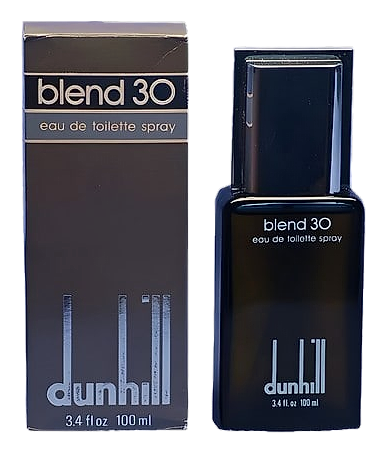
Blend 30 arrived in 1978, composed by Ron Winnegrad for Alfred Dunhill. The name suggests precision, a measured blend, calculated proportions, nothing accidental. In the context of Dunhill's heritage as a British house built on leather goods and understated craftsmanship, Blend 30 fits the lineage: quality ingredients handled with discipline, not excess. It wasn't trying to shout. It was trying to last.
What makes Blend 30 distinctive isn't a single star note, it's the structure. Seven top notes, seven heart notes, seven base notes. That's not a happy accident. That's an architect's approach: layer upon layer, each tier doing its job before stepping back. The aromatic opening is textbook fougere, but the base, oakmoss, leather, hay, ambergris, has the kind of density that no longer exists in modern formulations. This is pre-IFRA oakmoss. This is the original density.
The evolution
The opening hits fast: lavender and citrus, the sour cherry adding an unexpected brightness beneath the bergamot and lemon. Rosemary keeps it herbaceous, neroli threads in quietly. Within twenty minutes, the top notes begin their retreat and the heart takes over, sandalwood and cedar arriving soft, geranium adding green floral lift, jasmine and carnation lending subtle warmth. The drydown is where Blend 30 earns its reputation. Oakmoss anchors everything with that deep, earthy, almost medicinal quality. Leather and hay arrive together, the smell of something natural, lived-in. Ambergris and tonka bean create a warm, animalic base that lingers close to skin for hours. On fabric, it holds a quiet presence into the next day.
Cultural impact
Blend 30 has earned a devoted following among collectors and vintage enthusiasts who seek out pre-IFRA formulations. The density of the oakmoss and ambergris base, ingredients that modern regulations have significantly limited, is what sets vintage Blend 30 apart from contemporary releases. Wearers describe it as the scent of someone who walks into a room and doesn't need to announce themselves. It sits in the Aromatic Fougere tradition alongside other established compositions of its era, but its vintage density gives it a warmth and animalic presence that newer fragrances in the genre rarely achieve.