
The Story
Why it exists.
The beginning
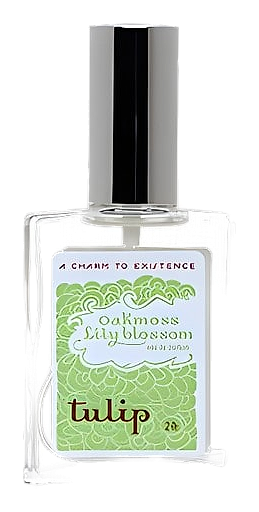
Oakmoss Lily Blossom arrived in 2010, part of Tulip Perfume Co.'s early catalog alongside Lemon Sugar and Amber Vanilla Bean. Victoria England is the perfumer behind the composition, and the fragrance reflects her instinct for blending straightforward botanical elements into something that reads honest. The press kit calls it "The Elegant Lady," a name that fits a fragrance built from lily, oakmoss, ylang-ylang, jasmine, and sandalwood, no elaborate architecture, no layered gimmick. Just a white floral with a green spine, made by someone who treats scent with care. Oakmoss Lily Blossom wears that approach quietly. It doesn't project across a room or announce its presence from across the table. It speaks softly, and it means it.
What makes this composition worth a second look is the structural inversion. Oakmoss, traditionally a chypre base note, is placed at the top, lending the opening that damp, forest-floor green character before the floral heart has a chance to settle in. The ylang-ylang then brings its sweetness and density, counterweighting the oakmoss's cool earthiness with something warmer underneath. Jasmine adds its warmth and that slightly indolic edge that pushes the heart into something more animal than clean.
The evolution
The first spray lands cool and green, oakmoss sharp and slightly bitter, before the lily rounds it out with a clean, almost dewy quality. The floral heart arrives within minutes: ylang-ylang's dense, almost fruity sweetness folding into jasmine's warmer, more indolic side. That middle phase is the loudest the fragrance gets, a full white-floral moment that reads creamy rather than sharp. As the hours pass, the jasmine recedes and the ylang-ylang softens into something more buttery and less tropical. The sandalwood takes its time, emerging slowly as a warm, woody hum underneath the fading florals. By hour four or five, most of the green and most of the bright floral have gone quiet. What's left is a soft, slightly powdery sandalwood close, warm, a little soapy, and surprisingly intimate. The next morning, on fabric, the trace reads as clean wood and the ghost of jasmine, faint but still there.
Cultural impact
Oakmoss Lily Blossom sits in a quiet corner of the chypre-floral category, a composition that places oakmoss at the front rather than burying it in the base. Its opening reads green and damp, forest-floor territory, before the white floral heart settles in underneath. The lily carries much of the middle, with ylang-ylang and jasmine rounding out the bouquet and sandalwood handling the close. On Fragrantica, the fragrance appears in algorithmic similarity lists alongside classic white-floral compositions like Givenchy Organza and Lanvin Arpège, reflecting its placement within that broader family rather than any direct comparison.