The Story
Why it exists.
The beginning
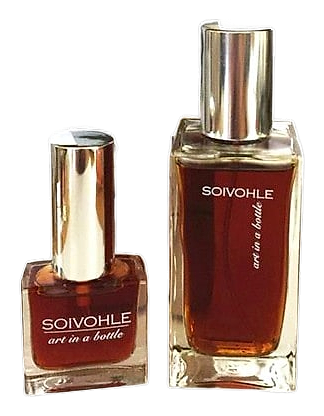
Rosa Sur Reuse arrived in 2012 from the studio of perfumer Liz Zorn, whose Soivohle line has been described as art in a bottle since 2002. The name carries a French echo, rose upon rose, but the composition reads less like a Parisian reprise and more like an overgrown American one. Zorn built the formula around a red rose at full saturation, the kind that stains fingertips and refuses to behave politely. Tuberose anchors the top, lush and almost narcotic before the fruit and greens arrive to lighten the mood. The whole thing lands with a hand-batched, botanical sensibility, cruelty-free and vegan by design, the house's signature approach to small-batch perfume making.
What makes Rosa Sur Reuse worth slowing down for is how it stacks its florals. The top opens on a pairing that shouldn't work so well, red rose with the heavy, creamy density of tuberose, but the fruit and the violet-laced heart pull it sideways into something less formal. Parma violet and orchid bring a powdery coolness. Red berries add a faint tart sweetness that lifts the bouquet without overwhelming it. Lily and lilac stretch the arrangement outward, lending a soapy freshness that softens the bolder florals beneath.
The evolution
The first thirty minutes belong to the tuberose and red rose, a thick, almost humid floral that sits close to the skin. Then the heart opens, and the composition lightens in a way that surprises. Parma violet and jasmine arrive with a powdery edge, while red berries add a thin line of sweetness that reads more like fruit skin than jam. The orchid and lily keep things from going too dense. After two hours, the oakmoss takes over. It's not a damp, dark moss here, more like the dry green of a garden wall in late afternoon. The vanilla and musk underneath are quiet, more suggestion than statement. By the fourth hour, what remains is mostly the rose and the moss together, a faded-petals-on-stone quality that lingers on clothes the next morning.
Cultural impact
Rosa Sur Reuse sits among fragrances that treat the red rose as something still worth investigating at serious depth. Wearers tend to be floral loyalists who want their rose with backbone, and the oakmoss base is what keeps it from reading as just another bouquet. It's the kind of scent that attracts attention from people drawn to dense, layered floral work. Discontinued status has pushed it further into the hands of collectors and those willing to track down remaining bottles.