The Story
Why it exists.
The beginning
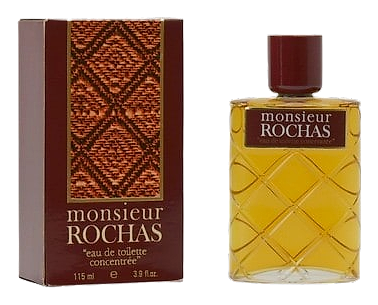
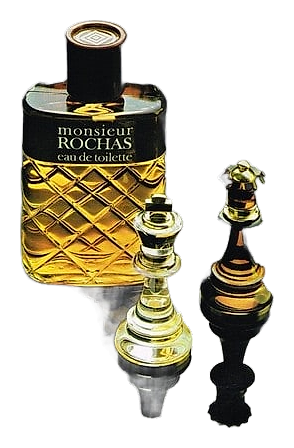
Guy Robert created Monsieur Rochas in 1968 with a clear intention: to bottle the Paris gentleman. Not the idea of one, the actual one. The man who lights a cigarette before stepping out, who knows exactly which café has the right table by the window. Robert reached for the intellectual elegance that Rochas the house had always embodied, the same house that dressed women with pockets in their skirts and called it modernity, and asked what it would smell like on a man who lived that way. The answer was composed, unhurried, and quietly certain of itself. It was never meant to shout.
The clary sage sets the tone immediately, not the sharp lavender-scent of the dryer sheet variety, but something earthier, slightly medicinal, with a nutty sweetness underneath. That complexity is what separates this from fresher, simpler aromatic fragrances. Combined with lavender in the opening, it establishes the fougère structure that carries the entire composition. But where many fougères stay cool throughout, Monsieur Rochas introduces carnation in the heart, a warm, almost dusty spice, and suddenly the fragrance shifts register. Galbanum adds a green bitterness that keeps the carnation from becoming sweet. Cardamom whispers.
The evolution
The opening arrives with the clarity of bergamot and lemon, a bright, clean entrance that lasts about twenty minutes before the clary sage and lavender take firm hold. From there, the heart develops gradually over the next two to three hours, the carnation emerging slowly, its warm spice building against the cool herbaceous base like two people circling before they sit down. By hour three, the drydown announces itself: oakmoss first, earthy and slightly musty, followed by patchouli's depth and the soft sweetness of tonka bean. The musk appears last, holding everything together like the lining of a jacket you didn't know was expensive. On fabric, it lingers into the next day, faint, resolved, almost apologetic about leaving. On skin, plan for six to eight hours with moderate sillage that stays close rather than announcing itself across the room.
Cultural impact
Monsieur Rochas has outlasted the era that produced it. Released in 1968, it arrived at the height of the fougère boom in men's perfumery, a category defined by its aromatic freshness and drydown structure. What distinguished this one was the carnation. Warm spice sitting inside classic fougère architecture was unusual then, and it remains so now. Fifty-plus years on, it occupies a specific space: not the mass-market freshness of its descendants, but something more considered. It doesn't reinvent itself or chase trends because it doesn't need to.