The Story
Why it exists.
The beginning
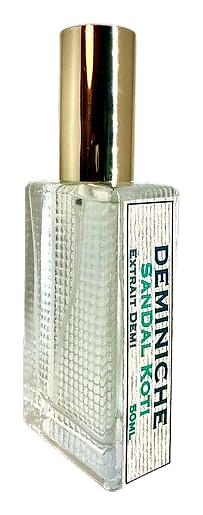
Sandal Koti takes its name from the traditional sandalwood warehouses of Mysore, India. Ricardo Ramos visited these storerooms in 2010 while researching raw materials across the subcontinent, a trip that ran alongside textile studies in Mumbai. A decade later, the memory of those aromatic vaults became a 2020 composition co-created with perfumer Jorge Lee. The fragrance translates a specific sensory place: the dense, sweet stillness inside a room built entirely from scented wood, where the air itself feels lacquered in cream and resin. Inside the bottle, that vault is reconstructed through an inversion of expectations, placing sandalwood where florals usually sit and letting tropical fruits open the door.
Most sandalwood-driven fragrances treat the material as a quiet base, something to ground brighter notes above. Sandal Koti flips that hierarchy. Sandalwood lives in the heart, surrounded by jasmine sambac, lilac, and a sharp green streak of galbanum, meaning the wood's creamy warmth has to compete with floral intensity rather than anchor it. The papaya and frangipani up top push things toward the tropical, almost edible, before oakmoss and labdanum drag it back to something mossy and resinous.
The evolution
The first thirty minutes are loud. Papaya and frangipani arrive almost simultaneously, sweet and lactonic, backed by lavender's herbal cool and ylang-ylang's dense yellow sweetness. There's an almost suntan-oil quality here, but greener, less synthetic. Within the first hour the jasmine sambac pushes forward, indolic and creamy, and the galbanum introduces a bitter green edge that slices through the fruit. This is where Sandal Koti becomes interesting: the tropical opening starts to feel like a memory rather than the present. By hour three, the sandalwood takes over. It doesn't arrive cleanly. It emerges through the lilac and galbanum, gaining weight gradually as the top notes fade. The drydown is where the Mysore warehouse reference lands: warm, woody, slightly dusty, with labdanum adding a faintly ambery sweetness and oakmoss grounding everything in damp earth. The musk at the base keeps it close to skin. On fabric the sandalwood lingers past six hours, sometimes longer.
Cultural impact
Sandal Koti sits in an unusual space within the brand's catalog: a sandalwood composition that doesn't center sandalwood. This one leads with papaya and yellow florals, an opening that many wearers describe as nostalgic, with a sunscreen-like sweetness that calls up summer heat and humid air. The heart complicates that impression quickly, as jasmine sambac and lilac push in with a denser, more indolic presence, and the green bite of galbanum slices across the sweetness like a blade of grass dragged through syrup.