
The Story
Why it exists.
The beginning
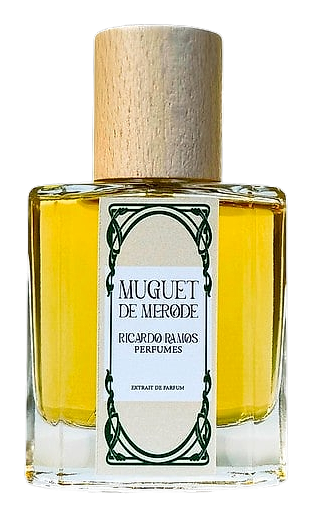
Muguet de Mérode is Ricardo Ramos's olfactory tribute to Cleo de Mérode, the Parisian dancer and model crowned "the most beautiful woman in the world" by L'Illustration in 1896. She started at the Paris Opera Ballet at eight, was painted by Degas and Toulouse-Lautrec by thirteen, and spent decades on pointe, a life measured in sweat, rehearsal rooms, and the particular exhaustion of someone who never stopped moving. Ramos wanted to capture something specific: the tension between her polished public image and the effort underneath. The elegance. The animalic heat. The exhausted beauty of a body that has performed itself into legend. That's what this fragrance is built to smell like. The name itself is a provocation. Muguet, lily of the valley, is delicate. De Mérode is lineage, fame, the notoriety of being the most photographed woman in the world before photography was ordinary.
The structure of Muguet de Mérode is what makes it work. In most white floral compositions the florals dominate from open to close. Here they don't. The top notes, hyacinth, lilac, bergamot, green apple, arrive vivid and almost sharp. There's a coolness to them, a green dewy quality that reads as morning rather than evening. The heart of lily of the valley, Egyptian jasmine, and mandarin unfolds as the top softens, giving the composition a creamy center that sweetens the green without losing it. The tonka bean and Haitian vetiver add warmth underneath without introducing sweetness, they're structural, not decorative. Then the base arrives: Virginia cedar, seagrass, Cambodian oud, styrax.
The evolution
The first minutes are bright. Bergamot and green apple, the citrus clean without sharpness. The hyacinth arrives quickly, that cool almost-medicinal green that defines early spring. Lilac adds a creaminess underneath, soft, powder-adjacent, the smell of something dried before it fully opens. The florals deepen as the top settles. Hyacinth gains a slightly narcotic quality. Lily of the valley arrives with its cool, slightly soapy precision. Jasmine and mandarin bloom underneath, sweetening the green edge. The hand-off is smooth. The florals don't retreat so much as they make room for what comes next. Then the base arrives. Seagrass. Cedar. Vetiver. A whisper of Cambodian oud. The florals are still there, hyacinth lingers, jasmine refuses to fully leave, but now the composition has mineral depth, a cool aquatic lift that makes the white florals smell different than they would in a warmer frame. Not ocean-sweet. More like the smell of a dance studio after the barre work ends. The drydown holds close to skin for the next 4-6 hours. On fabric, longer.
Cultural impact
Muguet de Mérode has started to build its quiet reputation among collectors who track artistic Spanish perfumery. The 2024 release sits in an interesting space, classical enough for chypre devotees, mineral enough to intrigue those who find most white florals too sweet. It hasn't generated widespread press coverage, but in niche fragrance circles the conversation is starting. The seagrass note has become the dividing line. People who notice it either love the unexpected aquatic depth or find it too unusual for a white floral. The truth is it's both, and that tension is the point.