
The Story
Why it exists.
The beginning
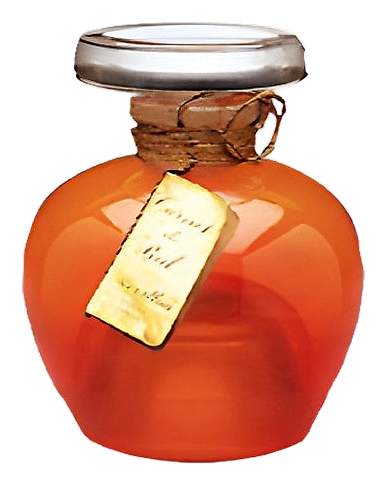
Maurice Shaller designed Carnet de Bal for Revillon in 1937, a Paris house that understood rare materials from its roots in the fur trade. The name is a dance card, that intimate booklet carried through an evening of waltzes and introductions. Shaller built the fragrance to capture something specific: the refinement of Parisian high society, where elegance was assumed, not announced. The house's philosophy of uncompromising material quality meant that no shortcut would appear in the composition. What emerged was not the powdery aldehyde of the era's grand florientaux. It was darker. More interesting. A chypre that refused to be merely beautiful.
What makes Carnet de Bal unusual is its heart within a heart, a rose-peach axis cushioned by Florentine iris and Madagascan ylang-ylang that gives the floral body both sweetness and a slightly waxy, perfumed depth. Most floral chypres place the rose in the top and let it dissolve. Here it breathes alongside the ylang-ylang for hours. The Roman chamomile in the opening is the curveball: not the clean herbal note of its German cousin, but something rounder, almost dusty, like the aftertaste of a digestif, which is exactly what the the community reviewer described. That apple-pear warmth tempering the citrus is what gives this its crepuscular quality.
The evolution
The opening is bright but tempered, citrus zest and a surprising herbal roundness from the Roman chamomile. Within minutes, the fruits settle and the florals rise. Cyclamen's greenpeppery edge leads into jasmine, ylang-ylang, and a sustained rose-peach duet that forms the core. The lily and iris add texture without whitening the composition. Two hours in, the chypre structure declares itself. Oakmoss takes the stage, patchouli's earthiness rises to meet it, and the vanilla-cream base begins to bloom. The civet and ambergris are patient. They don't announce themselves, they deepen the warmth, adding an animalic shadow that makes the florals feel skin-close and warm. By hour four, you're wearing oakmoss and vanilla with a whisper of musk. Eight to ten hours is the baseline on most skin. The next morning, a faint patchouli-vanilla warmth remains on fabric, the quiet aftermath of an evening you remember.
Cultural impact
Carnet de Bal occupies a specific corner of the fragrance world, the discontinued vintage chypre that serious collectors actively seek out. Its reputation rests on that unusual Roman chamomile note and the civet-oakmoss drydown, which together give it a dark, textured quality that many modern florals avoid by design. It sits comfortably alongside other discontinued 1930s chypres that Barbara Herman has written about in the vintage fragrance community.