The Story
Why it exists.
The beginning
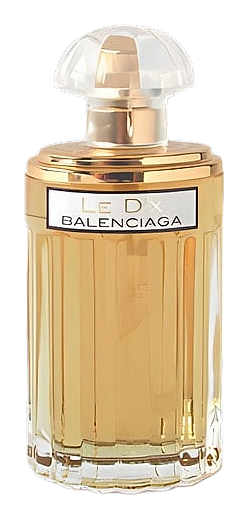
Le Dix arrived in 1947 as Balenciaga's first perfume. The name itself is an address: 10 Avenue George V, the Paris headquarters where Cristóbal Balenciaga was reshaping what couture could be. The house had spent a decade defining the silhouette of the future. Francis Fabron, tasked with translating that ambition into scent, reached for something counterintuitive, a gentle aldehydic floral that would hold its own beside Dior's landmark launch that same year. Neither house was playing it safe. Le Dix marked Balenciaga as one of the earliest couture houses to enter perfumery, and the composition carried that authority without heaviness or spectacle. Fabron built the structure around iris and violet leaf, two materials with an architectural quality of their own. They don't sprawl. They hold shape.
The aldehydic opening is the structural move, the moment where the composition declares its era and refuses to apologize for it. Aldehydes don't occur naturally in perfumery; they're synthetic, deliberate, the modernist choice. In 1947, using them was a statement of intent. Le Dix uses them to lift coriander and bergamot into something that reads as light rather than sharp, then hands the composition over to a heart of lilac, orris root, and rose that could easily overpower on their own. The aldehydes keep them in formation. The orris root deserves particular attention.
The evolution
The opening hits bright. Aldehydes lift the bergamot and lemon into something almost sparkling, a few minutes of clean citrus before the floral heart begins to assert itself. The transition isn't dramatic, it happens in slow stages, coriander threading between the citrus brightness and the growing lilac and rose. Violet leaf arrives as the bridge, adding a green, slightly bitter edge that prevents the heart from becoming sentimental. Once the floral heart settles, the powdery quality takes over. Iris and orris root push the composition into that characteristic 1940s register, soft, close, warm. The vanilla and benzoin in the base don't arrive all at once. They build quietly beneath the flowers, warming everything without sweetening it. The civet is the tell. It's here, threaded low through the drydown, you won't notice it immediately, but it's the difference between a fragrance that smells beautiful and one that smells alive. By the final hours, vetiver and sandalwood anchor everything into something that reads as skin-warm rather than perfume-worn.
Cultural impact
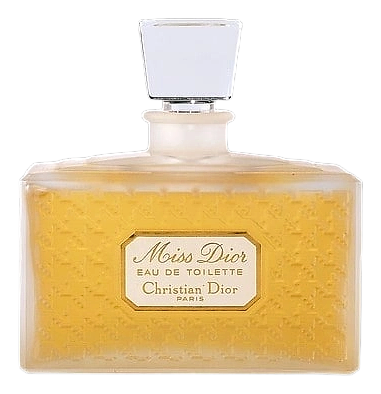
Le Dix carved its own space in the aldehydic floral canon. Where Dior's Miss Dior landed as a statement, Le Dix held quieter authority, structured, restrained, built for the wearer who doesn't need the room to know they've arrived. The aldehydic brightness gives it a modernist edge; the powdery iris and warm sandalwood bring it back to something soft and timeless. Wearers describe it as the scent of someone with taste formed early and never renegotiated. It sits comfortably beside Chanel No. 5 in spirit while maintaining its own distinct register. The 2025 reformulation preserved the aldehydic character and iris-violet architecture that made the original notable, keeping the house's couture precision intact in a different medium.