The Story
Why it exists.
The beginning
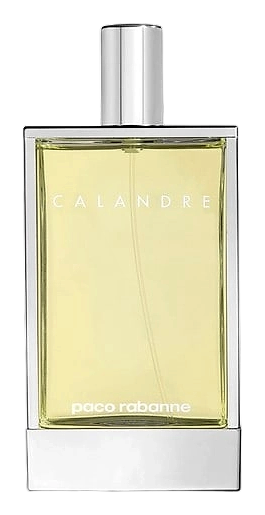
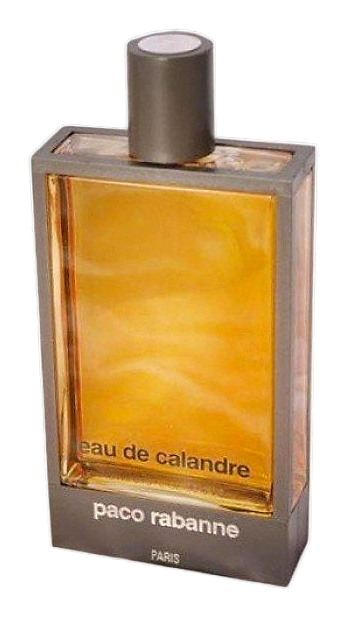
Calandre launched in 1969, the first fragrance from a fashion house still known for building garments from metal discs and chain mail. The name itself means wheel arch or car fender, a structural term pulled straight from automotive design. Paco Rabanne commissioned perfumer Michel Hy to translate that architectural language into something wearable, and the result was a chypre floral that felt, for the first time in perfumery, engineered rather than grown. The bottle by Pierre Dinand echoed the same logic, a brushed-metal disc that looked less like a vanity object and more like a component.
What makes Calandre unusual is how the aldehydes are deployed. In most aldehydic florals, those synthetic bursts serve as glitter, bright and decorative. Here they read structural, like the leading edge of something shaped and intentional. The green notes beneath them reinforce that architecture, giving the whole opening a leaf-and-steel quality that no purely natural ingredient could achieve. Michel Hy understood that aldehydes aren't just sparkle. They're scaffolding. Calandre is what happens when someone uses them to build rather than decorate.
The evolution
The first fifteen minutes are almost confrontational, aldehydes cracking open like light catching chrome, green notes slicing through underneath. The bergamot settles fast, doing its job and leaving. By the half-hour mark the iris arrives, powdery but cool, layered over rose and lily-of-the-valley that feel more like structure than bouquet. Geranium adds a peppery green edge that keeps the heart from going soft. Around the third hour the oakmoss and sandalwood start to assert themselves, and the chypre architecture becomes unmistakable. Musk and ambergris carry the final stretch, warm but never sweet, the vetiver keeping everything grounded. On fabric the next morning, what remains is a clean, mossy warmth that smells like expensive soap pressed into a wool coat.
Cultural impact
Calandre occupies a specific corner of vintage fragrance culture, where aldehydic green florals are treated as collectible objects of design history. It sits comfortably within the broader conversation of mid-century French perfumery, a period when aldehydes, mossy bases, and dewy florals defined the dominant French style. The fashion-house connection gives it cultural weight beyond the juice itself, positioning it as an artifact where couture sensibility and fragrance construction meet.