The Story
Why it exists.
The beginning
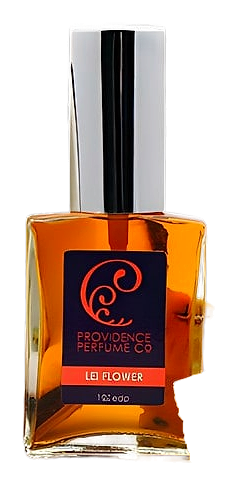
Lei Flower arrived in 2010 from Charna Ethier, founder of Providence Perfume Co. It carries the spirit of botanical perfumery the house was built on: ingredients drawn from real plant material, presented without pretense. The name itself evokes a Hawaiian lei, a garland of flowers offered and worn close, and that gesture of intimacy translates directly into what comes out of the bottle. On skin, the opening is bright and almost edible, yuzu slicing through the denser florals like citrus zest scattered over something warm. As the composition settles, frangipani takes the lead, creamy and slightly honeyed, while cocoa darkens the edges and vanilla wraps the whole thing in a soft, skin-like warmth.
What makes this composition unusual is its refusal to separate gourmand from floral. The fragrance weaves them together from the start, with caramel and sugar threading through frangipani and ylang-ylang like they belong in the same sentence. The almond note adds a marzipan softness that bridges the edible and the botanical, while blackcurrant in the base keeps everything from collapsing into pure sweetness. The way caramel and frangipani intertwine creates something almost confectionary, but the ylang-ylang pulls it back toward something more sultry and indolic.
The evolution
The opening hits bright and deceptively simple, yuzu and orange lifting over a warm caramel base that arrives faster than expected. Within 15 minutes the yuzu softens into something rounder, and the chamomile and tarragon pull the whole thing into an herbal, tea-like space that feels almost Mediterranean. Then the heart blooms. Frangipani, jasmine, ylang-ylang, and that marzipan almond arrive as a single gesture, creamy and sun-warmed, with sugar amplifying every floral facet. The drydown shifts gears entirely. Cocoa and vanilla take over, grounded by patchouli and warmed by coconut, while blackcurrant adds a dark fruit shadow underneath. Six hours later what remains is a vanilla-cocoa skin scent, soft and slightly powdery, the coconut and frangipani still ghosting through if you press your nose close.
Cultural impact
Lei Flower sits in an unusual corner of the fragrance world. It arrived in 2010 from a botanical-focused house that was already working with plant-derived materials when most mainstream perfumery still relied heavily on synthetic construction. What the fragrance offers instead is a tropical floral that doesn't feel like a compromise between natural ingredients and wearability. For wearers drawn to botanical perfumery but unwilling to give up sweetness, the overlap is rare, and Lei Flower occupies that intersection confidently.