
The Story
Why it exists.
The beginning
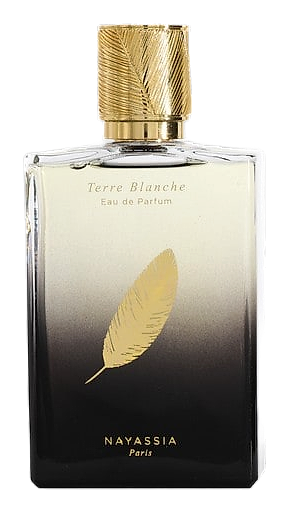
Terre Blanche translates roughly to "white earth," a name that evokes pale mineral landscapes and the silence of open stone. Launched in 2019, the fragrance sits within Nayassia's growing collection of scent-driven narratives, compositions designed to translate specific sensory experiences into wearable form. The house, rooted in the tradition of French perfumery, finds its register in aromatic and woody-spicy language, and Terre Blanche leans fully into that vocabulary. The composition reads as bright, dry, sun-exposed terrain, built from notes that gesture toward arid stone, warm bark, and resinous undergrowth.
What makes Terre Blanche distinctive is the mineral thread running through an otherwise traditional woody-spicy structure. That mineral facet lends a cool, stony quality which contrasts sharply with the warmth of saffron, cinnamon, and tobacco. The result avoids the heavy sweetness that often dominates compositions built on amber and sandalwood, instead holding a tension between arid brightness and grounded warmth, like sunlight on limestone before the temperature drops.
The evolution
The first thirty minutes are all brightness: bergamot and lemon flash quickly, edged by sage and coriander's green snap. Then the spices arrive, and the fragrance shifts register entirely. Saffron leads the heart, warm and leathery, joined by cinnamon and nutmeg that build a dense, almost tactile warmth. Lily of the valley appears here too, but it's structural rather than floral, adding a soft lift that keeps the spices from going heavy. As the hours pass, the mineral note surfaces with increasing clarity. It's the element that separates Terre Blanche from its woody-spicy peers: a cool, stony dryness that sits beneath the amber and tobacco like a foundation, giving the composition its pale, open-air quality. The tobacco is dry, not sweet, and it weaves through vetiver and patchouli for a grounded, slightly smoky close.
Cultural impact
Within Nayassia's collection, Terre Blanche occupies the warmer, more grounded end of the spectrum, leaning fully into spice and mineral where other compositions might reach for lighter or more familiar territory. The mineral note is the conversation piece: it lends the fragrance a stony, sun-baked quality that sets it apart from typical woody-spicy releases. The composition's dry heat and pale, arid character make it a natural choice for cooler months or transitional seasons, when warmer, resinous scents feel right against the chill.