The Story
Why it exists.
The beginning
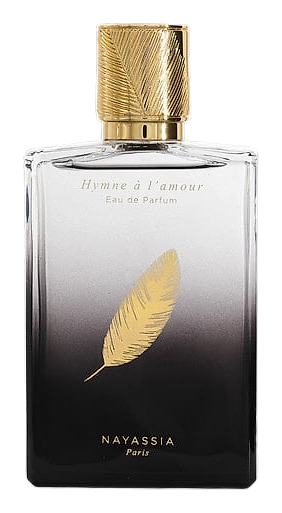
The name borrows from Édith Piaf's anthem, her tribute to Marcel Cerdan, the love story that ended when his plane never reached its destination. Nayassia released Hymne à l'Amour in 2019, and the fragrance sits within an ongoing project that treats scent as a vessel for memory rather than geography. The devotion. The ache. The specific weight of loving someone who isn't there to hear it. Absences carry their own perfume, and this one wears an absence. The composition is built around that feeling: not a place, but the shape a place leaves behind once it's gone. There is something quietly French in how it holds back, how it refuses to perform grief. It just lets the feeling sit close to the skin, unresolved, still warm.
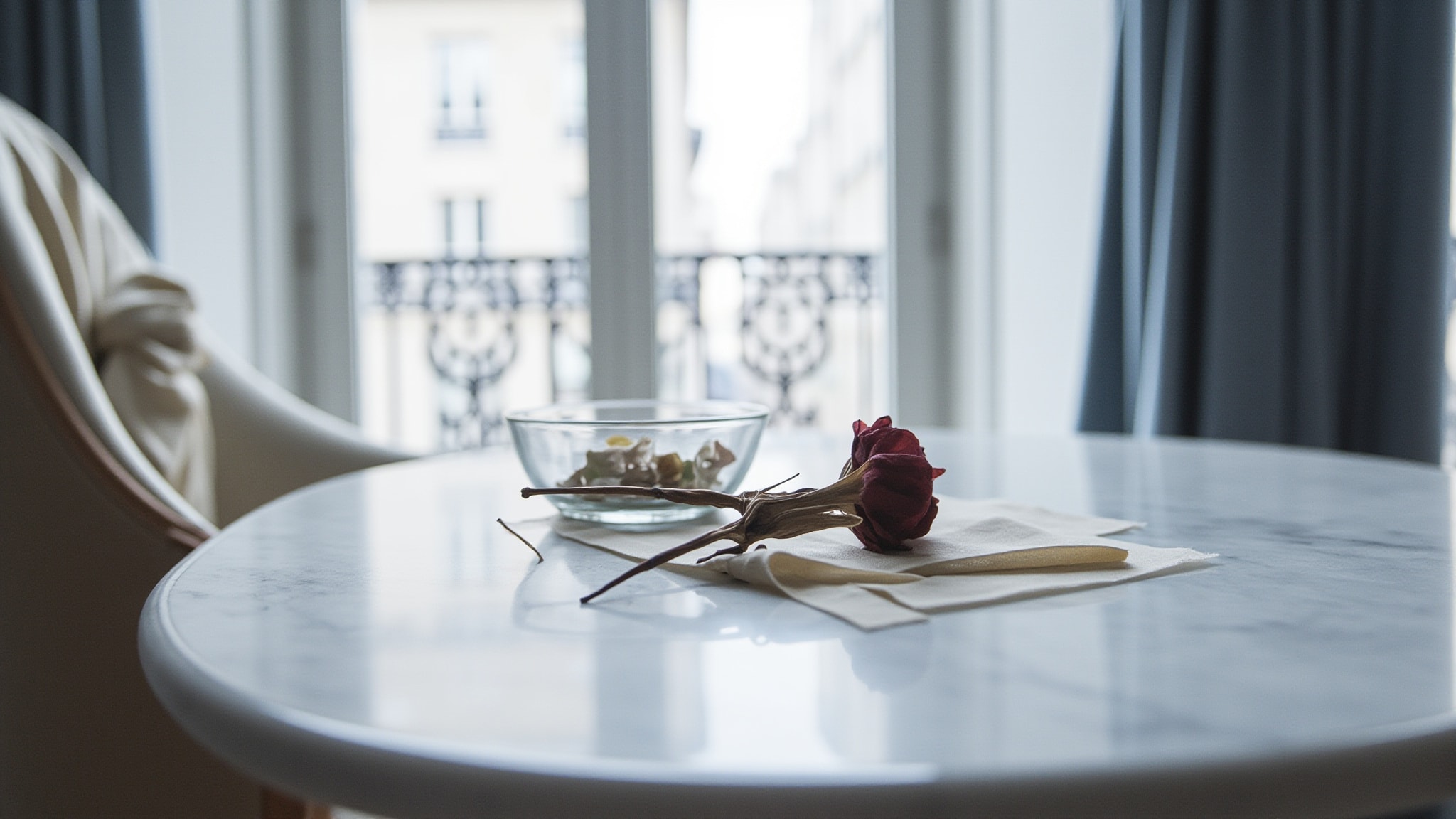
What makes the composition work is the restraint. Aldehydes could overwhelm, but here they function as effervescence, the fizz before the confession, catching light without ever shouting. The iris-heliotrope-rose heart reads classical, almost old-school French in its powdered formality, the kind of accord that recalls a vanity table scattered with face powder and dried bouquets. Then vanilla and amber ground it without heaviness, offering a soft landing rather than a sugary conclusion.
The evolution
The first ten minutes are deceptive. Aldehydes flash bright, almost carbonated, with red mandarin threading through like a single stitch of color in monochrome fabric. There is a brightness here that feels almost celebratory, a sparkle that rises before the composition settles into its more contemplative register. Then the powder arrives, iris settling over the surface with that distinctive cool, suede-like quality, and the rose opens beneath it, not a bouquet rose but something closer to dried petals in a drawer, faintly sweet and slightly faded in the best possible way. Heliotrope adds its almond sweetness, the note that makes everything feel slightly nostalgic, slightly sun-faded, like a photograph left in a window.
Cultural impact
Hymne à l'Amour occupies a specific corner of the fragrance world: the powdery-floral register filtered through a personal, emotionally charged lens. It appeals to someone who already knows they like iris-driven compositions, the kind that prioritize skin scent over statement, and wants something quieter, less known, more intimately worn. On platforms like Fragrantica it draws comparisons to Lipstick Rose by Frederic Malle, and it sits comfortably in conversation with other contemporary iris-powder florals that prize restraint over drama.