
The Story
Why it exists.
The beginning
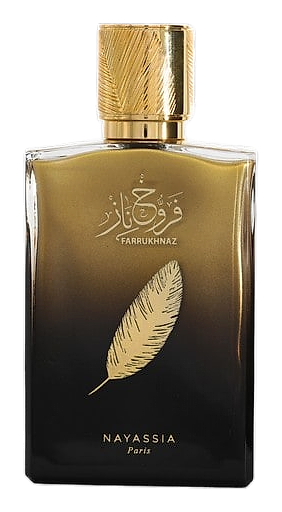
Farrukhnaz takes her name from a figure in The Thousand and One Nights, a princess of the Kingdom of Cashmere whose beauty was so arresting that men who beheld her would lose all reason, falling into a languor that consumed them. It's a story about the power of presence, the kind that doesn't announce itself but changes the room's energy the moment it arrives. The Nayassia house translated that narrative into scent: a fruity opening that catches attention, a floral heart that commands it, and a warm base that lingers the way a memorable impression does. Perfumer Randa Hammami composed Farrukhnaz in 2020, grounding the fragrance in the tradition of French perfumery while reaching toward the mythological geography its name invokes.
What makes this composition work is the hand-off. Fruity openings are common in mass-market fragrances, bright, simple, forgettable. Here, the plum and blackcurrant arrive with genuine depth, the fruitiness tempered by the Italian lemon's sharpness rather than diluted by it. Then gardenia enters and shifts the register entirely. Gardenia is a bold heart note: creamy, slightly narcotic, unmistakably floral in a way that can tip into detergent if poorly executed. Hammami anchors it with patchouli and amber in the base, which gives the floral something to stand on instead of floating into abstraction.
The evolution
The opening announces plum and blackcurrant in quick succession, dark fruit sweetness followed immediately by the tartness of Italian lemon cutting through. It's the first chapter of the story: attention caught. Around twenty minutes in, the gardenia begins to assert itself, and the character changes. The citrus fades, the floral grows denser, and there's a moment where the composition feels almost humid, the gardenia working with the remaining fruit to create something warmer than either could alone. The base arrives predictably but no less effectively: patchouli grounds the florals, amber adds warmth, musk makes everything feel closer and more intimate, and tonka bean introduces that powdery softness that becomes the drydown's calling card. As time passes, the fragrance settles closer to the skin, becoming a personal presence that those who draw near will notice.
Cultural impact
The name Farrukhnaz carries Persian linguistic roots, honoring the region's historical connection to perfumery traditions that date back centuries. This nomenclature serves as a bridge between classical oriental fragrance heritage and contemporary scent creation, suggesting a lineage of aromatic expertise passed through generations. The Persian origins of the name evoke a rich tradition of scent craftsmanship that continues to influence modern perfumery, particularly in how warm, opulent materials are combined and layered to create memorable compositions.