
The Story
Why it exists.
The beginning
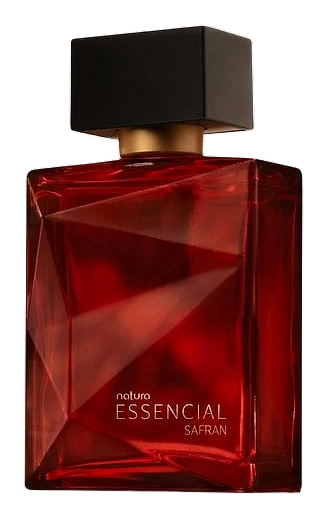
Essencial Safran, released by Natura in 2026, was composed by Verônica Kato and Pierre-Constantin Guéros around a single collision: saffron, the red gold of Arabian perfumery, meeting ishpink, a cinnamon native to the Amazon basin. The composition leans on two raw materials with strong geographic identities, one rooted in the old spice routes and the other in Brazilian agroforestry. Kato and Guéros built the formula to let those two materials share the frame, with aromatic fruits opening the composition and a dense woody-amber base underneath, giving the saffron and the ishpink room to move through the entire structure from first spray to late drydown.
What makes the structure worth slowing down for is the sheer breadth of the pyramid, with saffron anchored in the middle layers alongside a wide cast of supporting materials. The combination of oud, suede, cypriol, guaiac wood, and tobacco gives the drydown a smokier character than most saffron-led compositions tend to offer.
The evolution
The first fifteen minutes are a bright, almost jostling mix built around cardamom, raspberry, plum, and bergamot, with lavender and sage threading through to keep things from going purely sweet. Styrax adds a faint medicinal edge to the opening, the kind of cool, resinous sharpness that keeps the fruits from reading as a smoothie. By the thirty-minute mark the saffron arrives properly, joined by elemi, pink pepper, black pepper, and the ocotea quixos, building a dense warm-spicy core that softens into magnolia and rose rather than into a clean floral. Around the two-hour mark the base takes over. Oud and suede come forward, then leather, labdanum, and tobacco settle into something closer to worn-in jacket lining than sweet amber.
Cultural impact
Essencial Safran sits at an interesting crossroads for Natura: a Brazilian composition built around saffron, oud, and tobacco, with ocotea quixos, an Amazonian cinnamon, playing a central role in the structure. It is a warm-spicy oriental that draws its architecture from Arabian perfumery conventions while pulling key materials from Brazilian sourcing, and it offers a wearer an olfactory profile that lands outside Natura's fresher, greener territory.