
The Story
Why it exists.
The beginning
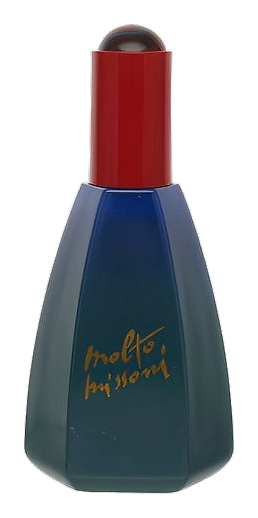
By 1990, Missoni had spent nearly a decade translating zigzag geometry into fragrance. Molto Missoni, the name itself a declaration of more, arrived as the house's most assertive statement yet. Perfumer Tristan Brando built this around warmth: not the shy kind that apologizes for itself, but the generous, enveloping kind that makes a room feel inhabited the moment you step in. The brief wasn't discretion. It was presence.
The rosewood in the opening is unusual, Palisander, the denser cousin, not the pale stuff that shows up everywhere else. That single choice shifts the citrus from bright to almost resinous, as if the bergamot and Amalfi lemon are filtering through wood rather than air. Then the heart deploys seven ingredients like a textile pattern: carnation's spice, ylang-ylang's cream, jasmine's flesh, neroli's bitter blossom, rose's softness, heliotrope's powder. It's layered the way Missoni layers color, each visible, none fighting. The base makes it permanent. Benzoin and vanilla don't just anchor the composition; they fossilize it into something that stays.
The evolution
The opening hits confident and citrus-forward, bergamot leading, lemon and orange blossom following, rosewood providing the woodsy undercurrent. Fifteen minutes in, the florals take over, but they're not delicate. Carnation and cinnamon introduce themselves early, lending a spice that keeps the sweetness honest rather than syrupy. The transition isn't a gentle handoff, it's a conversation where everyone speaks at once, then gradually the quieter voices (jasmine, neroli, heliotrope) find their moment. By the second hour, the drydown announces itself: amber and benzoin arrive like a curtain drawn at golden hour, warm and immediate. The vanilla doesn't dominate, it cushions. Musk keeps everything skin-close, cedar adds structure, patchouli gives earth. This fragrance doesn't project for attention. It lasts 8-10 hours, evolves on its own schedule, and by the end of the day, what's left is the faint impression of warmth on skin. Not loud. Not gone. Just there.
Cultural impact
1990 was peak era for opulent, warm-oriental women's fragrances, and Molto Missoni arrived squarely in that moment. The house's fashion identity brought a built-in visual language to fragrance: the bottle and packaging echoed the zigzag motifs, the color palette translated warm amber and deep wood into glass. Wearers describe it as the scent of someone comfortable in their own skin, not hiding, not performing, just present. It's the fragrance equivalent of a well-made knit: approachable luxury that doesn't announce itself but rewards attention.