The Story
Why it exists.
The beginning
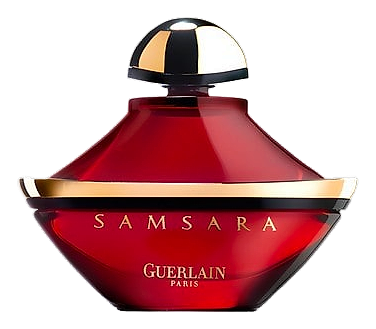
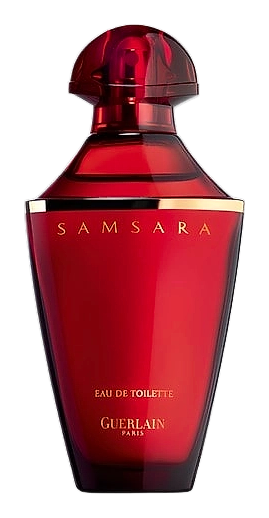
In 1989, Jean-Paul Guerlain and Gérard Anthony faced a question that seemed settled: woody notes belonged to men's fragrance. Samsara was their answer, and a quiet revolution. The brief called for something that had never been done in these quantities. Sandalwood, the resinous heart of countless maleorientals, was about to become the foundation of the first great woody women's fragrance. The name itself, borrowed from Sanskrit, suggested something cyclical, eternal. A fragrance that would return and return, worn by women who understood that refinement isn't loud.
What makes the composition remarkable is how the sandalwood behaves. Here it doesn't whisper as a base, it leads. The sandalwood in Samsara is the creamy, slightly sweet Mysore variety, used at a concentration that pushed Guerlain's sourcing and extraction to new limits. Around this woody core, Guerlain built a pyramid of florals unusual in their powdery character: orris root, violet, and iris all share that same slightly starchy, violet-leaf quality. The result is a fragrance that smells unified from first spray to last breath, not layered, but woven.
The evolution
The opening arrives bright and golden. Bergamot and ylang-ylang hit first, that tropical flower smells like ripe banana and cream if you let it, but within minutes the iris slides in. Not a harsh transition. More like a curtain being drawn back to reveal the real room. The sandalwood announces itself by the 20-minute mark, and from there it owns the skin. What follows is an 8-to-10-hour arc of powdery warmth: violet and vanilla in the heart, tonka and amber underneath, sandalwood present from hour one through hour eight. On fabric, it outlasts itself. You find it in a scarf three washes later.
Cultural impact
Samsara arrived in 1989 as a provocation disguised as an eau de toilette. The idea that a women's fragrance could be built on sandalwood, that a material associated with masculine orientals and temple offerings could belong to a woman who had earned her place in the room, was radical enough that Guerlain barely framed it as such. The fragrance simply existed, confident in what it was. Three decades later, it remains in the Les Légendaires collection, worn by women who find in it the same quality it always offered: presence without announcement.