The Story
Why it exists.
The beginning
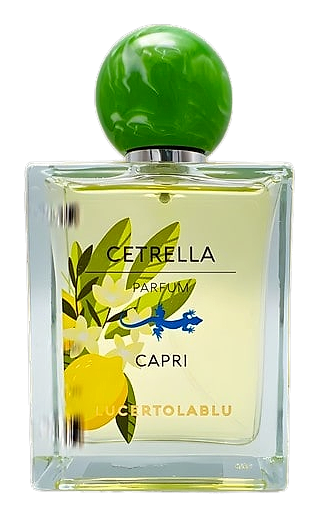
Cetrella draws its identity from the rugged terrain that frames the Italian coastline, translating geography into something you can wear. The official Italian description sets the scene vividly: a burst of citrus freshness filling the air, fused with notes rising from the sea, a walk through Mediterranean scrubland accompanied by scents as layered and singular as the island itself. Lucertolablu built the fragrance as a vignette of that specific environment, a place where wild vegetation meets salt air, where the aromatic intensity of herbs and shrubs clings to warm stone.
What gives Cetrella its identity is the herbaceous heart it builds underneath the citrus opening. Green olive, myrtle, red thyme, and pink pepper form a genuinely aromatic Mediterranean middle, layered and somewhat rough around the edges in a way that feels intentional. The base keeps that grounded character intact: mastic resin, olive wood, and moss. These are earthy, resinous materials with real weight to them, chosen to anchor the lighter top notes rather than vanish underneath them.
The evolution
The first ten minutes are loud and clean. Bergamot, lemon, and orange hit alongside water notes, bright and slightly sharp, like biting into cold citrus on a hot morning. The aquatic accord reads more like salt spray than pool chlorine. By minute thirty the citrus begins to recede, and the herbal heart takes over. Thyme, myrtle, pink pepper, and green olive give the scent a bitter, resinous edge, less cologne, more crushed leaves underfoot. Around the two-hour mark the base starts surfacing. Mastic and olive wood bring warmth, moss adds an earthy dampness, and ginger offers a quiet hum of spice underneath. The drydown stays close to skin, an herbal woodiness that reads more aromatic than woody. After four to six hours what's left is a soft moss-and-olive-wood whisper, gentle, skin-like, still recognizably Mediterranean but considerably quieter than the opening promised.
Cultural impact
Cetrella represents a particular approach within contemporary fragrance, one that prioritizes evocation over abstraction. Rather than building around a generic concept of freshness or cleanliness, the composition commits to a specific terrain and its associated vegetation, salt air, and rocky warmth. This kind of geographic specificity has become a quietly influential thread in recent releases, with houses using local materials and landscape-driven concepts to differentiate themselves from the broader citrus-aquatic category. Lucertolablu's work fits into that current, offering something tied to a real sense of place.